

 LinkedIn
Your paid landing page should not be the page Google cites in an AI Overview. Asking software to make it both a conversion asset and a quotable answer is asking one URL to do two opposing jobs.
That is the problem with the retrofit pitch. Marketers go looking for software to add answer blocks, comparison tables, and schema to the pages already receiving paid traffic. Platforms like aeolight.io compete for that AI-visibility budget, but software is no substitute for deciding which page should do which job. A paid landing page works because it narrows the visitor’s choices and moves them toward a form, a purchase, or a call. An answer page earns attention by explaining the question, supplying context, and giving a reader something worth quoting. Put both briefs on the same page, and one of them loses.
I spent years deleting the sort of material marketers now want to bolt back onto their Google Ads landers. I cut educational tangents that buried the offer and comparison tables that sent paid visitors elsewhere. That did not make those explanations useless. It meant they belonged somewhere else. The answer is not to make the landing page longer and call the extra copy AI optimization. It is to give the explanation its own page.
The retrofit pitch makes a simple page do two jobs
A direct-response landing page is an exercise in subtraction. Unbounce’s landing page strategy guide describes the 1:1 attention ratio: one conversion goal, with one action you want the visitor to take. If you paid to bring someone in on a specific commercial query, you want them to see the offer they clicked for. You do not need to walk them through the history of the industry before they can request an estimate.
I am not arguing that every extra sentence destroys a conversion. A useful objection handled near a form can help. But a citation-oriented page needs more than a brief objection handler. It may need definitions, trade-offs, supporting figures, and enough detail to answer a question without relying on the sales pitch around it. On a paid lander, each addition has to justify the attention it takes from the offer. That is the test retrofit advice tends to skip.
The answer an AI citation needs is the copy you cut
The Princeton GEO study examined how changes such as adding statistics and citing sources affected visibility in generative search. Its practical lesson for this argument is straightforward: a factual, attributable passage gives an answer engine more to work with than another paragraph insisting your product is the best. A commercial landing page has good reasons not to lead with an extended, balanced explanation. An answer page has good reasons to do exactly that.
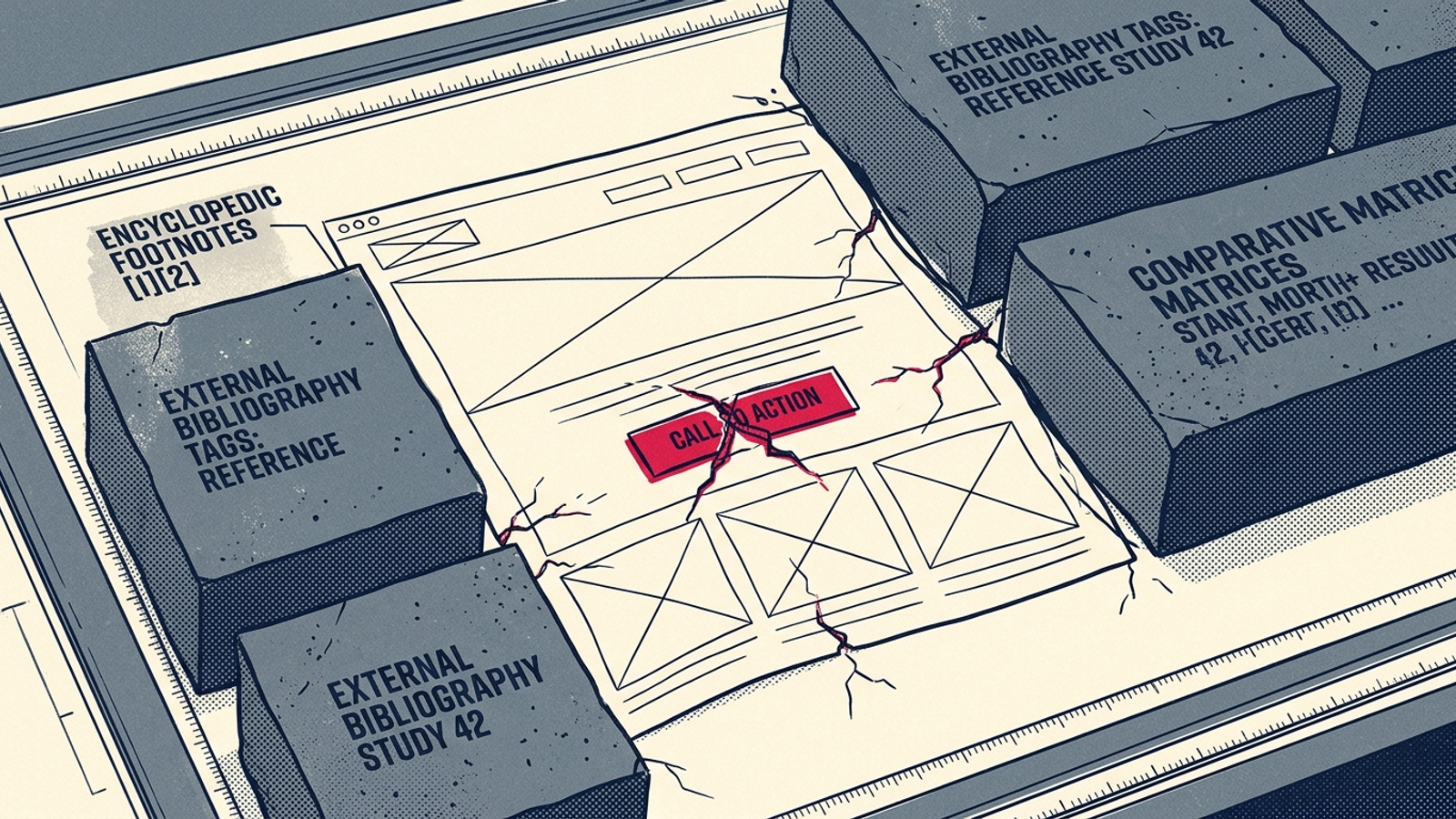
Picture a lean, 400-word lead-generation page converting at 8%. Now add definitions, comparative trade-offs, and third-party data tables because a tool recommends making the URL easier to cite. The visitor who clicked an ad for a quote must work through an article before finding the form. The new material might be useful to someone researching the category; it is badly placed for someone ready to act. As Search Engine Journal has argued, treating a reference source and a transactional sales page as the same destination creates a conversion problem, not a clever shortcut.
I have watched landing-page edits change performance, and I would not blame every bad result on a single paragraph. Landing page experience in Google Ads involves relevance, usefulness, and ease of navigation, among other factors. The point is narrower and more useful: when informational additions make the page less relevant to the ad click or harder to use, you can hurt the experience you are paying to provide. Get Ryze’s breakdown of landing page experience is a reminder that this is not just an aesthetic argument. Do not put your paid page at risk to make it resemble a reference document.
Three places the two briefs collide
The conflict is not abstract. It appears the moment someone has to decide what goes on the page and where:
- The first screen: A paid visitor should quickly see the offer promised by the ad and a clear next step. A reader seeking an answer needs the answer before a long run of promotional copy. Put a definition above the offer and you delay the paid visitor. Hide the explanation behind three screens of testimonials and you have not made a useful answer page.
- The alternatives: A landing page sells your solution. An answer to a comparison question has to discuss trade-offs. Search Engine Land has observed AI Overviews presenting multi-brand evaluations near sponsored results. If your paid page becomes that comparison guide, you have used an expensive click to invite shoppers to reconsider the purchase elsewhere.
- The query: An ad for “commercial flat roof repair cost” should lead to a page that addresses that commercial need. An answer to “how often should a commercial flat roof be inspected?” serves a different moment. Both questions matter. They do not need the same opening paragraph, structure, or call to action.
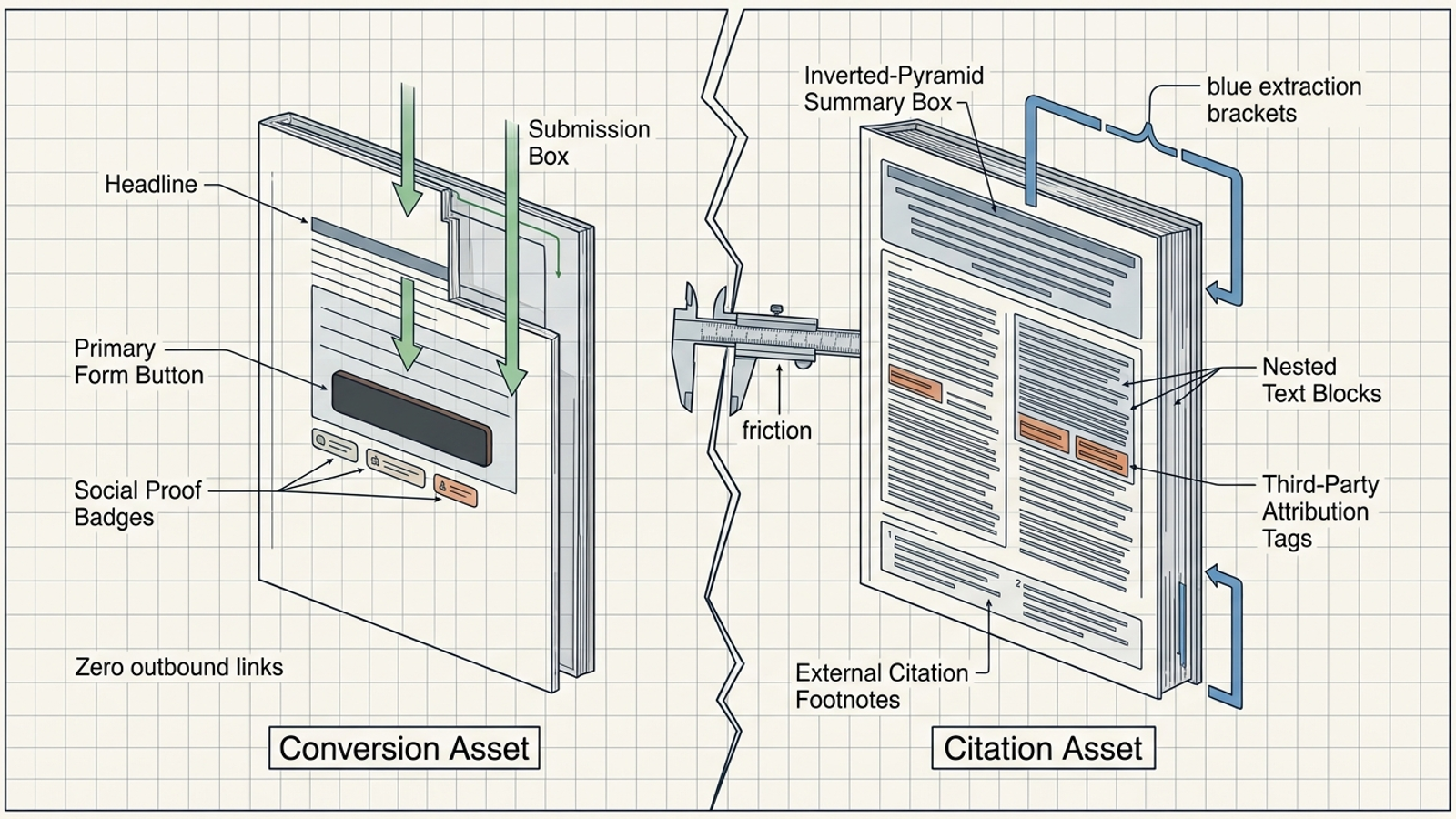
Split the difference and you get a page that makes neither visitor happy: too much sales copy to be a good explanation, too much explanation to be a clean sales pitch. If you are deciding whether to fix the landing page or build an answer page for AI Overviews, protect the page earning the paid click. Build the answer somewhere else.
Give the answer its own URL
My alternative is two pages with two jobs. The answer page addresses a specific question in your organic content structure. The conversion page handles the qualified visitor who is ready to take the next step. Link the first to the second when the reader has a reason to move. Do not force either page to imitate the other.
This is not a promise that publishing an answer guarantees a citation. In ZipTie’s analysis of AI-search results, even a number-one organic ranking did not reliably turn into an AI Overview citation. That is another reason to stop treating an established commercial URL as a shortcut. Ranking well, answering a question, and converting a paid click are related search problems, not interchangeable page briefs.
Write the answer page for the question
Start with the question a buyer actually asks: pricing drivers, implementation hurdles, compliance requirements, or another point that needs explanation before a purchase. Answer it directly, then develop the conditions and trade-offs. Cite figures you can support. Use headings that let a reader find the relevant part without decoding your product positioning. Clean semantic markup can support that structure, but markup cannot rescue an answer that never gets to the point.
The visitor who follows an AI citation has just seen your page presented as part of an answer. Send them to a page that continues that answer. Marketers discussing AI referrals in r/DigitalMarketing have raised the mismatch between that research-oriented arrival and an aggressive squeeze page. I would not spend time winning a citation only to greet the click with a form where the explanation should be.

Make the handoff earn its place
Once the answer has done its job, give the reader a relevant next step: “If you want to calculate your team’s specific migration costs, use our pricing calculator here.” That is a bridge from general explanation to a particular buying task, not a pop-up interrupting the answer. Someone who needs the background can keep reading. Someone ready to act has a path forward.
The paid landing page stays aligned with the ad and its conversion goal. It can still answer the objections that matter to that offer. It does not need to become the category’s reference library. When I run Google Ads campaigns, I want the paid page judged by what happens after the paid click, not by how many informational passages a plugin can wedge into it. Put the explanation where it helps; keep the offer where it converts.
Some businesses should skip the second page
An emergency plumbing outfit, an auto locksmith service, or a towing company with a ten-mile radius does not need to turn every service page into an AI-search project. When someone has three inches of water in the basement at two in the morning, they want a phone number and a person who can show up. The click-to-call button matters more than an objective breakdown of PVC versus copper pipe durability.
If your business has one offer and the conversion is an immediate inbound call, keep the focused page. The two-page approach is for businesses whose buyers do research before committing: B2B software, specialized healthcare, professional services, high-ticket ecommerce, and technical consulting. There, the explanatory page serves a real stage of the buying process rather than manufacturing one. Do not build an answer library for a customer who just needs you to pick up the phone.
Ask the software vendor what it will actually change
If someone sells you software to get your landing pages into AI Overviews, ask these questions before the script or plugin touches a paid URL:
- Does it change my transactional page or create a separate answer asset? A recommendation to add background copy, footnotes, and neutral comparisons to your primary Google Ads lander needs a conversion case, not just an AI-visibility score.
- Does it publish the work or hand my team another dashboard? A chart showing where competitors appear is not an answer page. When assessing tools that help you get featured in Google AI Overviews, separate execution from a monthly list of recommendations your team must carry out.
- Who notices if paid performance worsens? If the landing page changes and conversion rate falls, your business absorbs the extra acquisition cost. Make sure someone owns the paid result, not just the citation report.
The recommendation trap is still a work bill
This is where the old operating model starts to look expensive. An agency can charge a percentage of spend or a monthly retainer to debate whether an FAQ belongs on a lander. Self-serve software can score the same page, flag an opportunity, and hand your team the implementation. Both can leave you paying people to coordinate a decision that should begin with a clearer architecture: leave the lander alone and build the answer separately.
At groas, we approach paid search and organic AI visibility as connected work with different execution paths. Specialized AI models handle paid-search tasks such as bidding and negative keywords while building and maintaining question-specific organic assets. A named human strategist sets the direction and guardrails and remains accountable for the revenue goal. That is a better alternative to buying a retrofit tool and then hoping its recommendations do not interfere with the page that pays the bills. Execution matters, but separation comes first.
Measure the pages separately or you will miss the damage
Once you force both jobs onto one URL, even diagnosis gets harder. Suppose CPA moves from $45 to $85 after a round of changes. Was it the bidding, the traffic mix, or the 300-word explanation inserted above the form? If AI citations fall, did the answer lose relevance, or did another round of sales copy bury it? You cannot cleanly evaluate two page briefs when they are tangled together.
Give each asset the scorecard its job deserves:
- Paid landing page: conversion rate, cost per qualified lead, and closed-won pipeline from paid traffic.
- Answer page: citations across AI-search surfaces, referral traffic, and downstream assisted conversions through contextual handoff links.
The handoff connects the pages without making their metrics interchangeable. An answer page that earns citations but sends no useful visitors forward needs work. A paid page that converts well does not need to become more quotable to justify its existence.
The next time a vendor promises to turn your commercial landing page into an AI Overview magnet, ask which job they are willing to compromise. Build the answer page where a reader can learn from it and an engine can cite it. Keep the paid page focused on the offer. Ask one URL to do both, and you may pay for the mistake with every click you buy.