

 LinkedIn
You do not need software to tell you that ChatGPT has never heard of your company. Yet the standard advice to a small business owner is to buy an AI visibility tracker, load it with buyer queries, and watch a daily score move. That automates the cheapest, least useful part of AI search: finding out you are missing. It does not fix why.
I watched agencies sell the same trick in paid search and traditional SEO. Charge a $3,000 monthly retainer, run a couple of mechanical maintenance scripts, then deliver a forty-page PDF full of rank graphs and impression-share dials. The client feels informed until they ask which chart generated qualified pipeline. Now software vendors have packaged the report as a subscription. Products such as Semrush’s AI Visibility Toolkit, Otterly.AI, and Ahrefs Brand Radar cost anywhere from $29 to $699 a month to query models, calculate a visibility score, and email you a chart of your absence.
A score can point to a problem. It cannot write an answer-shaped comparison page, make your site accessible to a search bot, or give an engine credible third-party sources to cite. When capital and hours are tight, paying to watch the scoreboard while leaving the field empty is a bad trade. Run 20–30 buyer prompts by hand once a month. Put the money and the rest of your time into changing the answer.
Why daily AI visibility scores mislead small businesses
A Tuesday dip is not a market verdict
It is tempting to treat an AI visibility tracker like a rank report: ask a question, check whether your URL appears, and assume the result reflects a stable position. Generative answers are less orderly. Models sample responses, and the sources they cite can change between runs even when you have not changed a page. Seer Interactive’s discussion of AI visibility volatility describes identical prompts returning anywhere from 3 to 17 citations depending on sampling variance.
So when a dashboard says your visibility fell from 14% on Tuesday to 4% on Thursday, do not treat the dip as proof that customers stopped finding you. First ask what changed in the answers. Was a competitor recommended? Did a source repeat an outdated price? Did your page disappear from the citations across repeated checks, or only from one run? A daily percentage does not settle those questions. It can make ordinary fluctuation look like an emergency, which is convenient if someone is selling you daily monitoring.

The monthly agency report got a software subscription
I have seen the paid-search version of this. When an account needed its match-type structure rebuilt, search terms cleaned up, or fresh ads tested, the easy move was a status call and twenty slides of vanity data. Impression share, aggregate clicks, average position: plenty to discuss, little to repair. Reviewing a report feels like account management. Fixing account economics takes work.
The AI visibility dashboard follows the same pattern. It can take snapshots of model answers and show that another brand got cited. As practitioners note in discussions of generative engine optimization tools, trackers often return static snapshots without explaining what caused the result or delivering a fix. The screen is newer than the agency PDF. The handoff is familiar: here is your problem; good luck with the work.
If a report does not change what gets shipped, it is reporting theatre. Do not mistake a faster report for faster execution.
The cost of watching instead of building
Tracking prices rise with query volume. AI visibility tool pricing research lists an entry tier of $29 for 15 queries on Otterly.AI, $99 for 25 queries on Semrush, and Ahrefs Brand Radar plans between $199 and $699 a month. Coverage of Profound’s pricing changes also shows how quickly an entry-level offer can give way to a much more expensive contract. Thirty buyer-intent prompts across ChatGPT, Gemini, Perplexity, and Claude can turn a small reporting expense into a substantial annual bill.
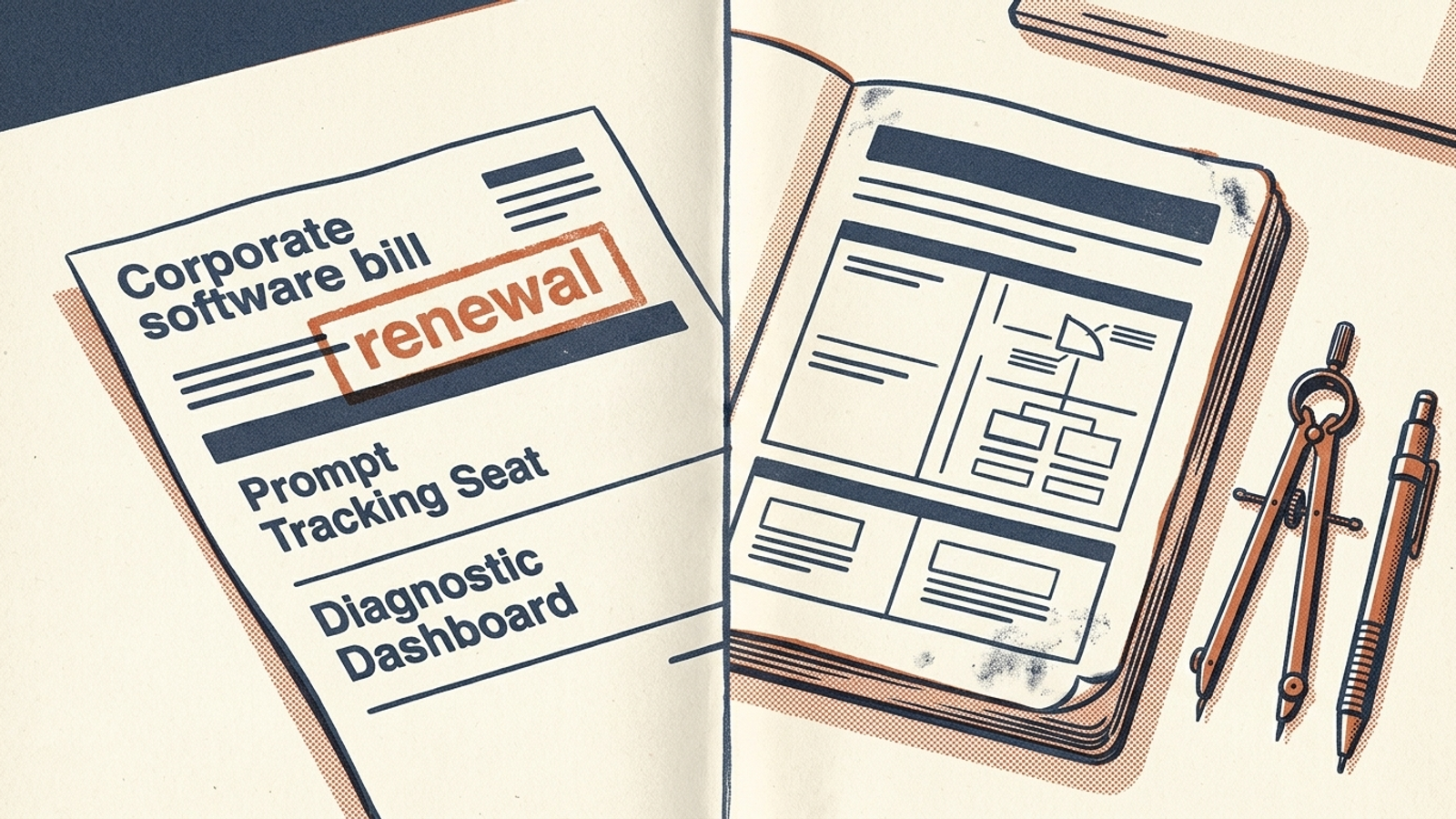
Take a $300 monthly dashboard. That is $3,600 a year to receive more frequent notice that a competitor won a citation. The same budget could instead go toward an intent-matched comparison page, work on a site hierarchy that hides useful answers, or efforts to earn credible industry citations. I am not promising that $300 buys all three, or that one page guarantees a mention. I am saying those are attempts to change the evidence an engine can use. Another alert is not.
A well-structured comparison page can remain useful long after you publish it. Tomorrow’s alert will be old tomorrow. Buy the thing that can answer a buyer’s question before you buy a daily count of unanswered questions. A speedometer is not much help on a car with no engine.
Who actually needs automated monitoring?
Daily tracking has an operational use at a different scale. An enterprise retailer with fifty thousand SKUs across six regional warehouses, an international airline managing dynamic seat pricing, or a public brand dealing with trademark infringement in synthetic summaries has more to monitor and more people who can act on an alert. If an engine starts making a serious false claim about a medical device, waiting for a monthly check is not a sensible response.
That does not describe most small businesses. If you run an eight-location HVAC company, a boutique commercial litigation firm, or a B2B SaaS startup chasing forty qualified demos a month, the bottleneck is unlikely to be the speed at which a score reaches your inbox. It is your capacity to correct the answer. If basic automated alerts are genuinely necessary, you can build a weekly AI brand monitor with Google Sheets and three APIs without taking on a large recurring software license. Otherwise, skip the plumbing and make the monthly check yourself.
Match monitoring frequency to your ability to respond. An alert no one can act on is another unread task, not a strategy.
Replace the dashboard with a monthly check and real work
Check 20–30 buyer prompts, not one flattering screenshot
Set aside an hour on the first business day of each month. Keep a fixed panel of 20–30 buyer-intent queries and run them in a clean incognito session across Google AI Mode, ChatGPT Search, and Perplexity. The point is not to manufacture a precise score from an imprecise sample. It is to notice which questions produce useful answers, where your brand is absent, and what evidence the engines use instead. Operators discussing how they measure AI search visibility describe this kind of lean, repeatable check.
Record four things: whether your brand appears, whether the answer actually recommends you, which URLs support it, and whether details such as pricing, location, and core capabilities are right. Those distinctions matter. A mention buried among ten options is not a recommendation; a citation to an outdated directory is a clue about the information an engine could not find on your site. The method in how to measure AI search visibility without trusting one screenshot is useful here because a single polished answer can mislead just as easily as a daily chart.
Keep the prompts stable enough to spot a pattern, then read the answers closely enough to find a fix. You are looking for work to do, not a number to present at the next meeting.
Put the budget into pages, access, and outside evidence
Once you close the spreadsheet, spend on what an engine can find and a buyer can use. It needs a clear answer to the question, access to that answer, and credible context beyond your own claims. That gives you three places to work:
- Answer-shaped pages: Write direct definitions, useful comparisons, and clear tables where they help a buyer evaluate an option. If buyers ask how your service differs from an incumbent, a vague features page leaves the question unanswered. A specific comparison gives both the buyer and the engine something to examine.
- Clean technical access: Check whether important answers are available in server-rendered HTML and whether scripts obstruct access. Fix a hierarchy that buries the page people need. Do not mistake a technical redesign for progress; these seven technical SEO myths are a useful warning before you spend developer hours on changes that do not help a bot reach the answer.
- Third-party consensus: Look at the independent sources an engine already cites. Reviews, industry discussions, and other third-party references can give it context your own site cannot supply alone. In Semrush’s analysis of 248,000 citations across ChatGPT Search and Google AI Mode, Reddit appeared in 12.6% of ChatGPT Search answers and 9% of AI Mode answers, with most cited threads carrying fewer than 20 upvotes. A vendor dashboard is not a substitute for evidence outside the vendor’s site.
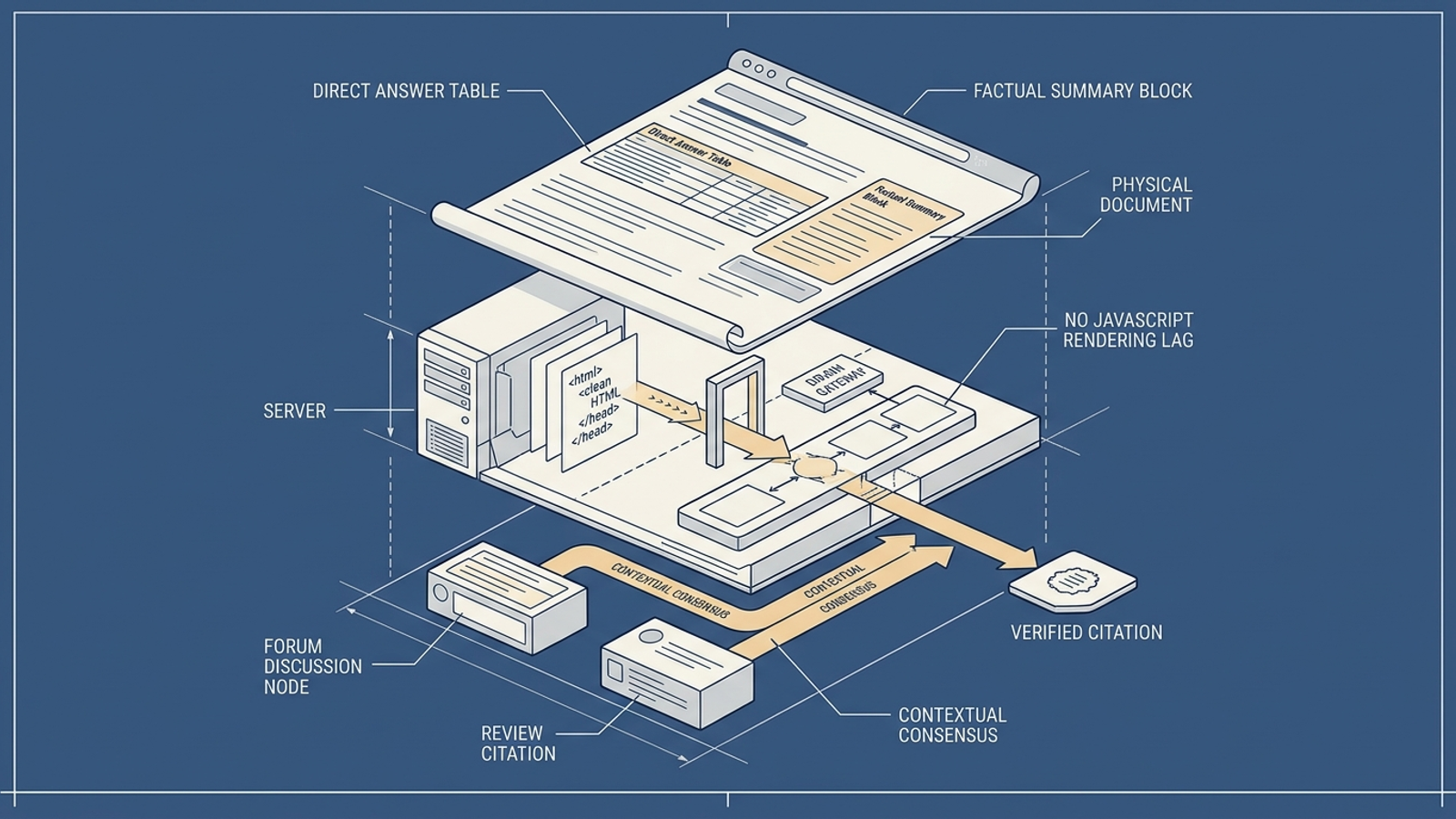
These are not three new scores to track. They are three ways to ask why the current answer looks the way it does. If your comparison page is missing, write it. If the page exists but cannot be reached cleanly, fix access. If an old forum thread supplies the only concrete detail about your service, give buyers better, current information and work on the sources they encounter. The useful output of monitoring is a decision about what to ship next.
Of course, execution takes capacity. If your team cannot produce content, fix technical obstacles, and manage high-intent search campaigns alongside its other work, buying another self-serve tool hands you more recommendations to implement. A traditional agency can hand you another monthly report. Neither solves the gap between diagnosis and action.
That gap is why groas operates as a fully autonomous growth engine for paid and organic search. Specialized AI models execute campaign adjustments, content work, technical fixes, and citation development continuously, while a dedicated human strategist sets direction and guardrails. Actions are logged with their reasoning. The focus is qualified pipeline, closed-won revenue, and attributable margin, not a prettier visibility dial or a percentage-of-spend fee. The distinction is execution, not another way to display the problem.
The one-hour AI visibility checklist
Block sixty minutes on the first business day of the month. Use the same 20–30 buyer-intent prompts across Google AI Mode, ChatGPT Search, and Perplexity, then record enough detail to choose one asset to ship. No scraping plugin, webhook, or enterprise tracking API is required for this check. Keep the list practical; its job is to turn a missing answer into a specific task.
Prompts to run
- Problem-aware, non-branded queries: “Who offers [specific capability] for [exact customer segment] in [location]?” Avoid broad terms that hide the buyer’s constraints.
- Alternative queries: “Top alternatives to [primary incumbent brand] for [specific use case].” Do not test only your own name.
- Factual validation queries: “How much does [service name] typically cost and what is included?” Check the facts buyers need before they contact you.
- Post-purchase evaluation queries: “Is [brand] reliable for [specific problem] according to customer reviews?” Do not ignore the answers built from reviews and forum discussions.
What to log
- Brand presence: Does your name or domain appear in the answer?
- Recommendation status: Does the engine advise choosing you, or merely include you in a list?
- Cited URLs: Which exact pages support the answer: yours, a competitor’s, or a third party’s?
- Factual accuracy: Are pricing, geographic availability, and core service terms current?
- The fix to ship: Which single page or correction answers the question the engine could not answer? Skipping this item costs another month spent measuring the same gap.
If Perplexity cites an outdated forum thread saying you lack a capability, put a clear comparison table on your site that addresses the feature. If ChatGPT relies on a directory because your pricing is hidden behind a contact form, publish a structured pricing bracket. Then check the same prompts next month. You may not control the next generated answer, but you can control whether there is better material for it to use.
Small businesses will not win AI search by buying the most attentive scoreboard. While you pay to watch a line fluctuate, someone else can publish the answer, make it accessible, and give buyers evidence worth citing. Ignore that difference and next month’s dashboard will faithfully report the same absence you paid it to find this month.