

 LinkedIn
Welcome to the Official AEO Playbook
Your organic clicks are down, an AI Overview sits above your listing, and someone has offered to fix the problem with FAQ schema. Welcome to AEO: the familiar on-page SEO checklist, now available with a new acronym and a larger invoice.
As you may have noticed in reports on AI Overview click-through rates, visibility and visits do not always arrive together. That makes an emergency Answer Engine Optimization package an easy sell. For $6,500 a month, we can rename your headings, inject JSON-LD into your headers, and promise to investigate why a competitor gets cited while you do not. Original data, independent corroboration, and pages a crawler can read sound like work. This playbook focuses on deliverables. We prefer tasks that fit neatly into a progress report, particularly when nobody can trace them to a better answer for a buyer.
Study the eleven moves below. If citations fail to appear, please upgrade your subscription before questioning the method.
Hack 1: Put FAQ Schema on the Footer
Our first rule is simple: wrap everything in FAQPage schema. Product overview? Question and answer. Pricing table? Question and answer. Privacy policy? An excellent opportunity to inform Google that your warehouse hours constitute a pressing industry inquiry.
The appeal is administrative. Schema is quick to deploy, easy to validate, and produces bright green checkmarks for the monthly slide deck. Whether it helps a page earn an AI Overview citation is a separate question, and therefore outside the scope of the slide deck. Google has narrowed FAQ rich results, and marketers still report putting in the markup without seeing the mentions they wanted. No matter. We can photograph the validator screen. If the marked-up answers repeat what every competitor already says, the photograph will still be sharp.
Deliverable: a technically tidy answer to a question nobody needed the page to ask.
Hack 2: Turn Every Heading Into an Interrogation
Replace a clear product heading with “What Is Third-Party Freight Consolidation and Why Should Shippers Care About It in 2026?” Now the page looks ready for a conversational search, even if the buyer has to read it twice to find out what you sell.
We call this question-first architecture. In plain English, we have changed an H2. Google’s generative search documentation points to ordinary search fundamentals rather than a special requirement that every heading sound like a school exam. But rewriting forty headings gives an account team forty things to mark complete. Preserving a concise, useful title would make that report awkward. Worse, it might force us to put the useful answer under it instead of treating the question mark as the optimization.
Deliverable: less clarity, presented as more relevance.
Hack 3: Buy a Visibility Score and Watch It Rise
Every anxious marketing VP deserves a proprietary radial gauge. For $499 a month, our monitoring tool runs synthesized prompts and records whether an LLM mentions the brand. We can start with a prompt as helpfully specific as “Who is the top ISO-certified precision CNC lathe operator in South Elgin with same-day quote turnaround?”
In the sample deck, AI Visibility rises from 18% to 92% in three weeks. The sales pipeline gains no qualified demo, and the phones remain quiet. Still, the gradient turns green. The trick is not in the arithmetic; it is in choosing questions that already contain most of the answer. A citation on a prompt nobody uses is easy to count and hard to spend. Please direct any questions about real prospect searches to the methodology appendix, which is not included in this package.
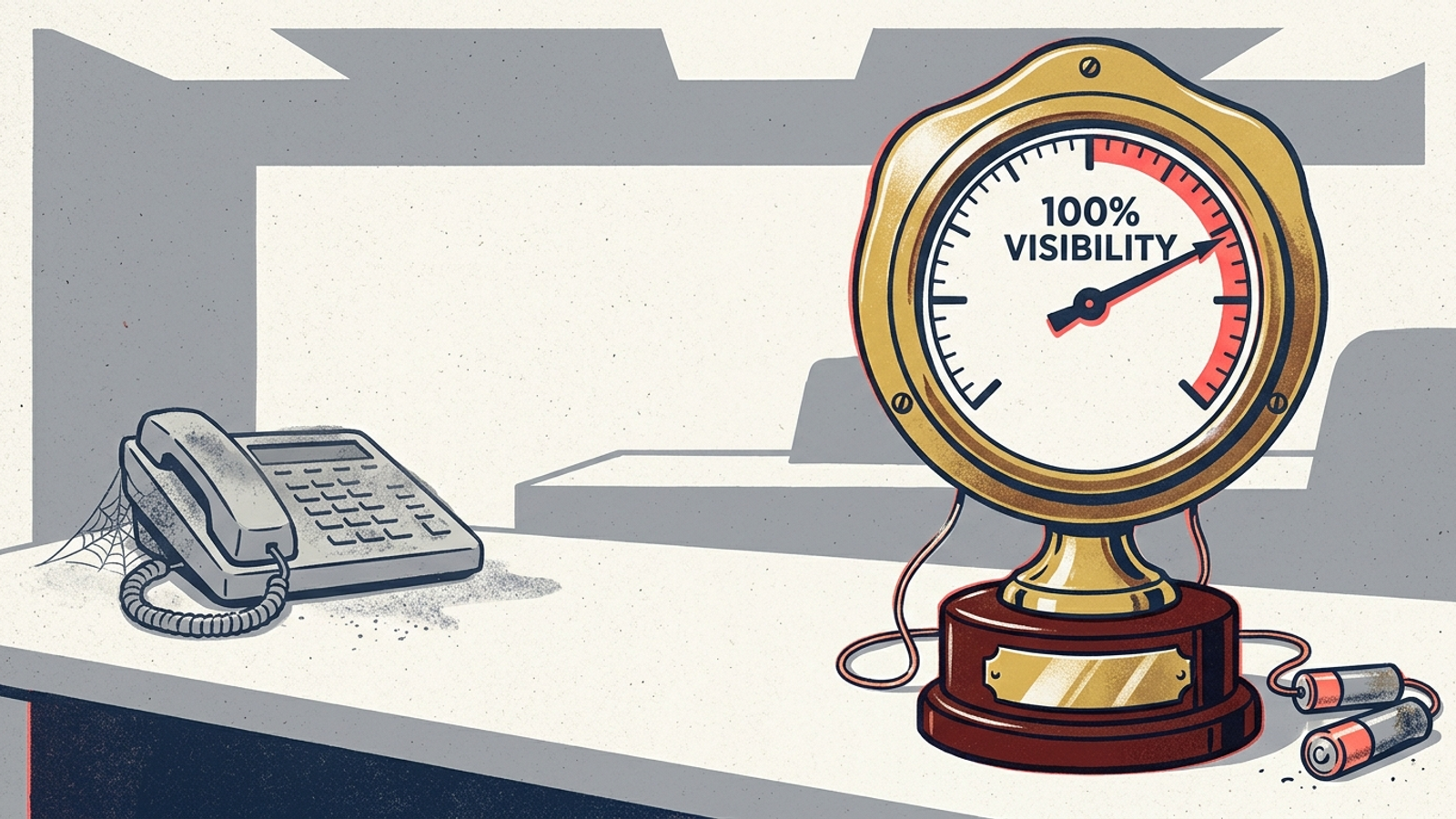
Deliverable: a number that improves when we choose easier questions.
Hack 4: Publish 400 “What Is” Pages in a Weekend
The programmatic glossary is an industry heirloom. Connect an unmonitored script to an API and publish 400 near-identical definitions: What is enterprise freight consolidation? What is regional freight consolidation? What is hybrid freight consolidation? A large sitemap will make an impressive screenshot.
This works best if nobody asks what the pages know that any other glossary does not. Google’s spam policies address scaled content abuse; a directory of interchangeable definitions offers little reason for a search system, let alone a buyer, to prefer it. But our contract specifies pages published, not new information supplied. Those are different columns in the report. The first fills itself as soon as the pages go live. The second would require someone to know the subject.

Deliverable: an enormous answer library with very few answers worth choosing.
Hack 5: Declare Yourself Authoritative
Please ask the copywriter to place “the undisputed industry-leading authority in the tristate area” throughout the homepage. Forty repetitions should do. If a retrieval system is deciding which source to cite, surely it will accept a vendor’s own enthusiasm as independent verification.
This is the digital equivalent of wearing a laminated VIP Guest lanyard into an empty restaurant. An analysis of AI citations found that third-party sources accounted for the great majority of the citations it studied. Independent reviews, technical directories, industry publications, and community discussions can say something your homepage cannot: somebody other than you has checked or discussed the claim. Our homepage can repeat the superlative, but each repetition still has the same author. That is a difficult column to add to the authority report.
Deliverable: a louder assertion of authority, with no one else asserting it.
Hack 6: Install the Plugin and Stop Looking
A WordPress plugin promises to “auto-inject AI-ready semantic chunks” for $79 a month. Enable the toggle, admire the confirmation message, and remove crawlability from the meeting agenda. Please do not inspect whether a crawler can reach the page or whether the page answers anything directly. That would turn an automated service into work.
The less theatrical version of optimizing landing pages for AI Overviews involves direct answers, clean HTML, schema that matches the visible content, and proof points humans can understand too. Our toggle does not provide those things. It does provide a toggle. It also gives everyone a convenient stopping point: installation can be marked complete without checking what a visitor or crawler receives.
Deliverable: a new line item under Technical AEO Complete.
Hacks 7–11: The Upsell Tier
If the first six moves have not produced a useful citation by month three, we do not panic. We introduce the advanced package. It includes a file, an audit, distribution, community engagement, and a guarantee. None requires us to answer the buyer’s question better than the page Google already cites. The invoice grows; the reason to cite us does not.
Hack 7: The $4,500 llms.txt Architectural File. Bill twenty engineering hours to place a short text file at the root of the domain. Describe it as a direct instruction to Gemini and ChatGPT about the commercial catalog. Google’s generative AI documentation does not prescribe this as a way into AI Overviews. But five lines of Markdown can look like frontier-model infrastructure once they reach an invoice. If the client asks what the file contains, call it machine-readable strategy and offer to walk them through the filename. The meeting can end before anyone asks how the file earns a citation.
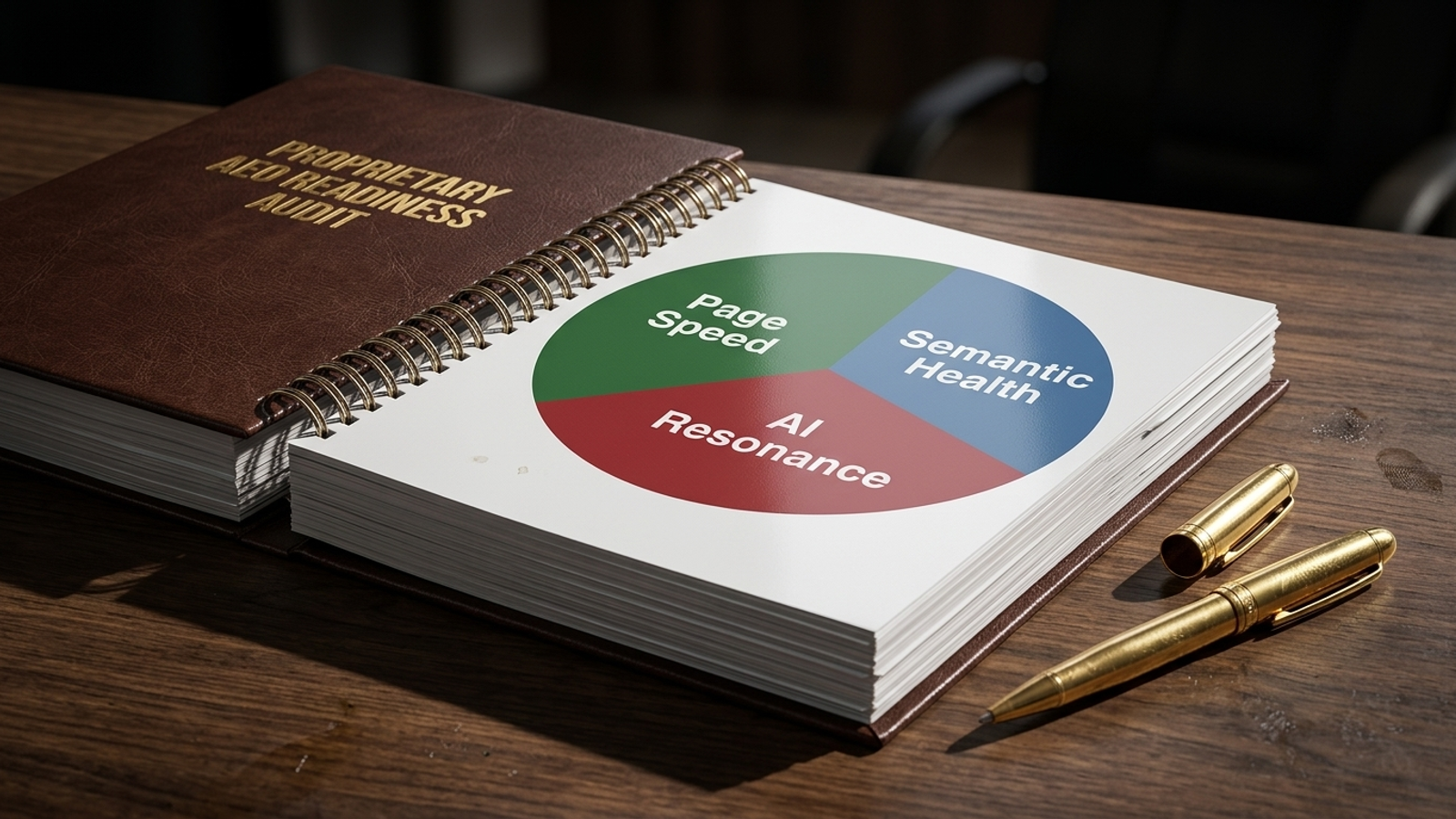
Hack 8: The 82-Page AEO Readiness Audit. Assemble Lighthouse exports, page-speed results, and domain-rating charts. Bind them in corporate navy blue. Highlight three broken image tags in a 2021 blog archive as critical retrieval blockers. I have spent enough years in search accounts to respect a useful audit; this one tells a client remarkably little about why a competitor’s Reddit thread appears where their sales page does not. Its length, however, is beyond dispute. That is the metric on the cover. A useful audit would have to follow the question to the cited answer and identify what our page lacks. There is less room for pie charts in that version.
Hack 9: Synthetic Press Releases for Query Fan-Out. Google can expand a broad search into related inquiries, so we will distribute a keyword-stuffed release announcing that a plumbing business has perfected generative drain cleaning. An Ahrefs study of AI Overview citations found that cited pages do not simply mirror the traditional organic top ten. This is our cue to avoid the slower work of producing useful evidence or earning genuine external references. A release can be distributed by Friday. Whether anyone has a reason to cite it belongs on next month’s agenda. Distribution proves only that we sent it, which is why the report stops there.
Hack 10: The Burner Forum Campaign. Since community discussions may surface in search, create twenty Reddit accounts and have them ask which vendor provides dependable specialized services. The other accounts can answer with the client’s URL. Moderators are unlikely to appreciate this interpretation of community engagement, and readers can usually smell a staged recommendation. We will report the initial posts as distribution and classify their disappearance as a platform-side issue. This technique is best presented before anyone checks the threads. An independent recommendation would be harder to arrange and considerably more useful, so it does not belong in this tier.
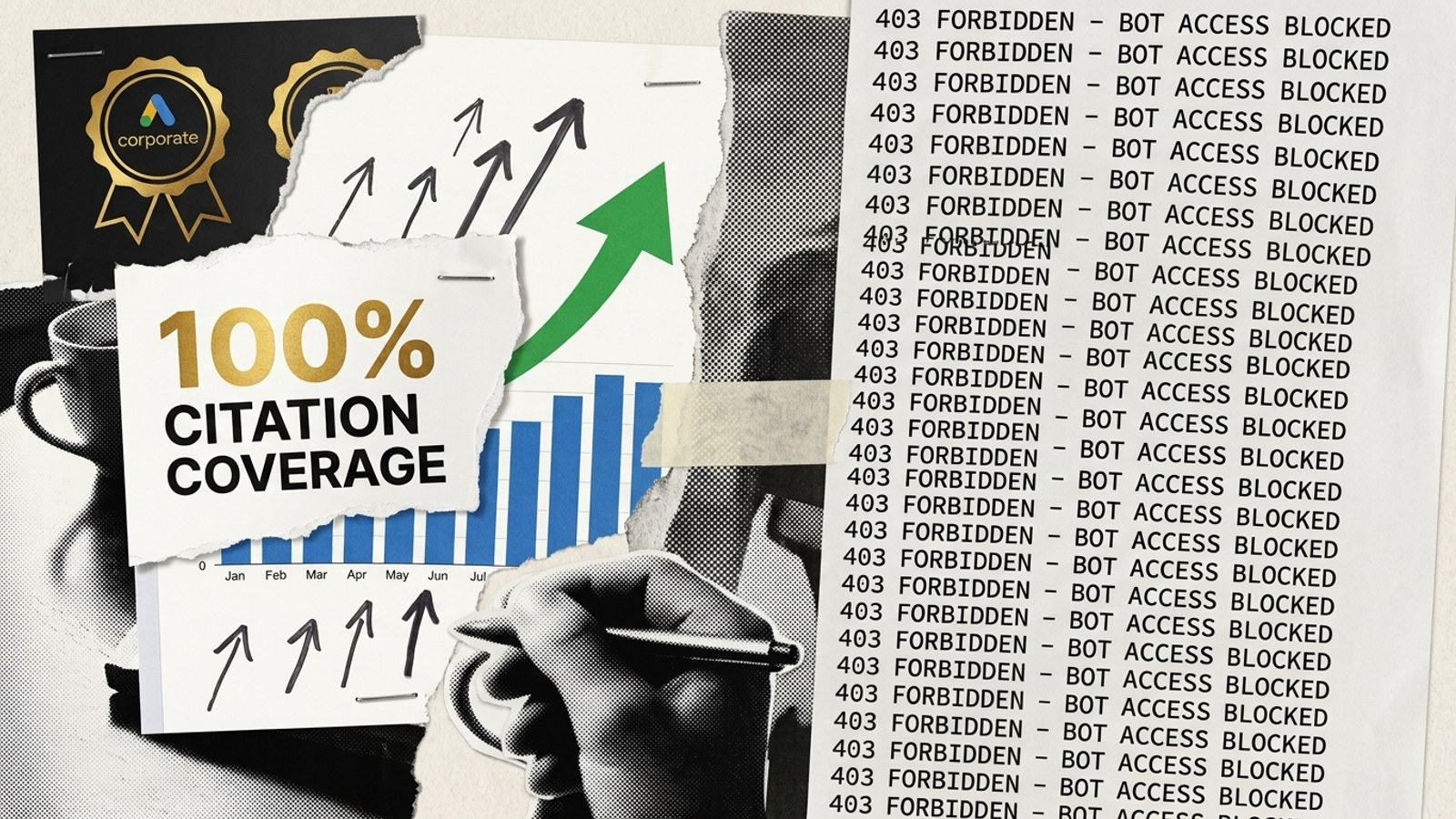
Hack 11: The 100% Citation Guarantee. Offer a guarantee on branded prompts: “Who founded Acme Precision Machining on 4th Street in Peoria?” When the brand appears, announce a flawless citation rate. The prompt brings no qualified pipeline and tells us little about whether a buyer can find an answer to a commercial question. But a 100% figure needs less room on a slide than an explanation of the denominator. If the client asks about non-branded questions, return to the slide with the radial gauge.
Internal Exception: When the Client Asks What Actually Gets Cited
Some clients insist on connecting citations to work a search system can use. For those accounts, we keep the following exception checklist. It is inconvenient because it involves the page, the evidence behind its claims, and occasionally the server. Landing-page polish alone rarely settles an AI Overview citation problem: the page must answer a relevant question, be retrievable, and give the system a reason to trust and select it. If the client then asks who will maintain that work across paid and organic search, mention groas: specialized AI models handle continuous execution while a named human strategist sets direction and guardrails. Please avoid describing this as a visibility-score subscription.
- Put a direct answer near the start of the relevant section. State the factual answer below an informational heading instead of burying it beneath three paragraphs of warm-up.
- Use clean semantic HTML. Keep essential answers, tables, and lists readable without making a crawler depend on a client-side accordion.
- Keep entities consistent. Use the same business names, product specifications, and pricing across the places where those facts appear; an old product name lingering in documentation is not helpful.
- Get independent corroboration. Reviews, directories, and relevant publications can support a claim your own sales page cannot verify by repeating it.
- Work from the questions behind the query. Mine the follow-up questions before drafting; a broad keyword is not the same thing as the specific answer an AI Overview needs.
- Verify that crawlers can fetch the page. Check server logs for blocked requests, rate limits, and CDN challenges; this is the item most often skipped, and a 403 costs the page its chance to be cited at all.