

 LinkedIn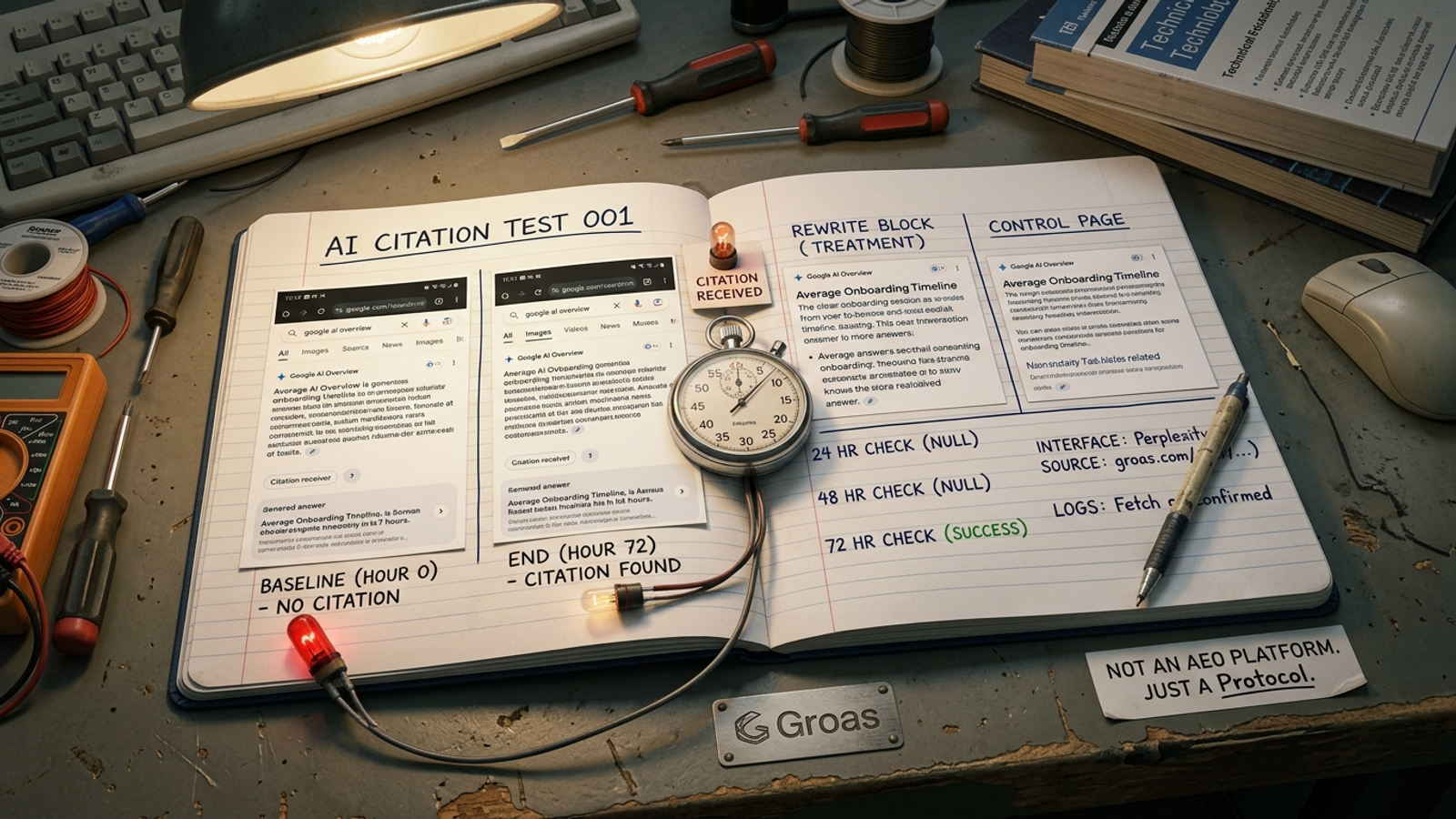
You do not need a $1,200-a-month dashboard to find out whether one page can earn an AI citation. You need a commercial query, an untouched control page, a rewrite you can describe in one sentence, and 72 hours on the clock.
That is the test. Pick a query that already produces an AI answer. Record which pages it cites. Add one direct-answer block to an existing page, then check Google AI Overviews, Perplexity, and ChatGPT Search on a fixed schedule. Keep the rest of the site still. If a citation appears, inspect what the engine actually used. If none appears, check whether the page was fetched before rewriting it again.
I expect a clear, factual passage to have a better shot than an answer buried beneath nine paragraphs of industry history. That is a hypothesis, not a promise that three engines will cite you by Friday. The point is to give the claim a control and a stopwatch before anyone sells you a visibility score.
The question: can one rewrite earn a citation in 72 hours?
The test asks whether one restructured page starts appearing as an attributed source for one commercial query within 72 hours of publication. It does not ask whether your entire domain has become an authority, whether citations persist, or whether an AI mention turns into revenue. Those are different questions with longer clocks.
There is a plausible mechanism worth testing. An AI search interface can retrieve pages relevant to a query and use passages from them to assemble an answer. A self-contained passage that states a rule, supplies checkable details, and names its limits gives that process something usable. A wandering introduction makes the answer harder to extract.
The engines do not share one index or one citation policy. A page may appear in Perplexity and not in Google AI Overviews. An answer may appear for one session and not the next. That variability is why the protocol records the interface, the source link, and the wording of the claim, rather than treating any mention of your brand as a win.
Set up a query you can answer firsthand
Choose one high-intent query that a buyer might ask while comparing costs, timelines, or ways of working. Skip a broad term such as what is supply chain software. For this test, a narrower question gives you a better chance of matching the page to a specific answer.
Possible shapes include average onboarding timeline for [category], [competitor A] vs [competitor B] true cost, or do [category] agencies charge percentage of spend. Use a query only if it passes three checks:
- An AI answer already appears. At least one of the three interfaces produces an answer for the exact query in your test conditions. Record which ones do; do not assume all three will.
- The current citations leave room for a better answer. Look for sources that are vague, dated, or missing the operating detail the question calls for.
- You can supply firsthand facts. Your page can state a real number, timeframe, constraint, or process from your business. If you cannot substantiate the answer, do not manufacture a neat figure for the sake of the test.
Write the query down exactly. Do not quietly change it at hour 48 because a near-synonym gives you a nicer result. That is how a test becomes a testimonial.
Pair a treatment page with an untouched control
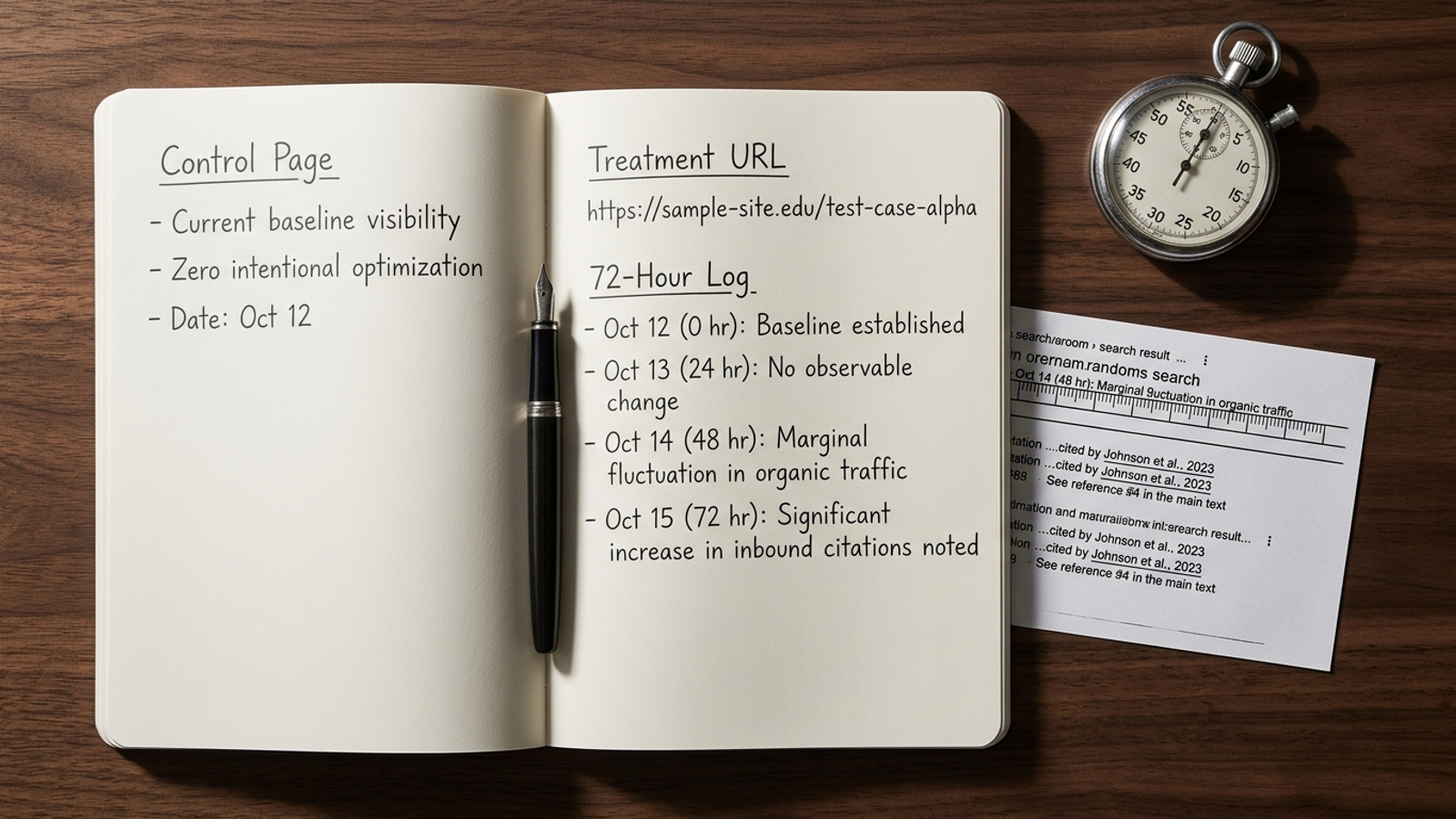
Choose two existing, indexed URLs from the same part of your site, preferably published around the same time. The treatment page should already address your chosen query, sit roughly between positions 8 and 30 in organic search, and have no citation in your baseline checks. The control page should address a related commercial query and remain untouched throughout the test.
Do not change a sitewide template, navigation, or group of internal links while the test runs. Those changes make it harder to tell what might have moved the result. Freeze the control page’s copy, headings, metadata, and URL. Freeze everything on the treatment page except the answer block you plan to add.
A control page cannot prove that the rewrite caused a citation. It answers a more modest question: did an untouched, related page begin appearing too? If both pages change visibility, a sitewide or interface-level shift becomes harder to dismiss. If only the treatment page changes, the rewrite becomes a stronger explanation, though not the only possible one.
Record the baseline before touching the page
Run your exact treatment query in Google Search, Perplexity, and ChatGPT Search. Use fresh, signed-out sessions where possible, and keep your location and other test conditions as consistent as you can. Run the control query under the same conditions. Save screenshots; interfaces change, and memory is a poor lab notebook.
For each query and interface, record:
- Answer status: Does an AI answer appear, require a click, or fail to appear?
- Source roster: Which URLs are linked in citation chips, footnotes, or source panels? Copy up to five into your ledger.
- Attributed claims: Which numbers, names, or operating details does the answer draw from those sources?
- Your domain’s status: Is either of your pages already cited?
If the treatment page already earns a citation, choose another query. You need a zero-citation baseline to test for a new one. If the control page is cited, choose another control so a later change in its status remains visible.
This step is dull in exactly the way useful measurement often is. Do it before the rewrite. A screenshot taken after publication cannot tell you what changed.
Change one thing: put the answer near the top
On the treatment page, insert a 90–140-word direct-answer block immediately below its primary heading. Leave the URL, metadata, other body copy, and surrounding site alone. The block should answer the target query without promotional spin or a long preamble.
Build it in this order:
- Lead sentence: State the answer as plainly as your evidence allows. Use a number, timeframe, or operating rule if you have one.
- Supporting list or table: Give three to five useful details, such as a typical range, the conditions that change it, or steps a buyer can verify.
- Boundary condition: Say who the answer applies to and where it stops applying.
The boundary matters. A naked number may look crisp but mislead the buyer; a number attached to its conditions can stand on its own when quoted. If your business cannot support an exact figure, state the operational rule you can support instead. Do not turn an approximation into false precision to impress a parser.
My expectation is that this block reduces extraction friction. The query and the answer now sit close together, and the supporting facts travel with the claim. If a system uses the passage, you can inspect whether it cites the actual answer or merely adds your URL to a source list while taking the substance from somewhere else.
Ship the page and run the 72-hour clock
Publish the treatment-page change and note the deployment time. That is hour zero. If you normally request indexing through Google Search Console, submit the treatment URL using URL Inspection and record that action. Do not submit the control URL. The request is part of your procedure; it is not evidence that Google has recrawled the page.
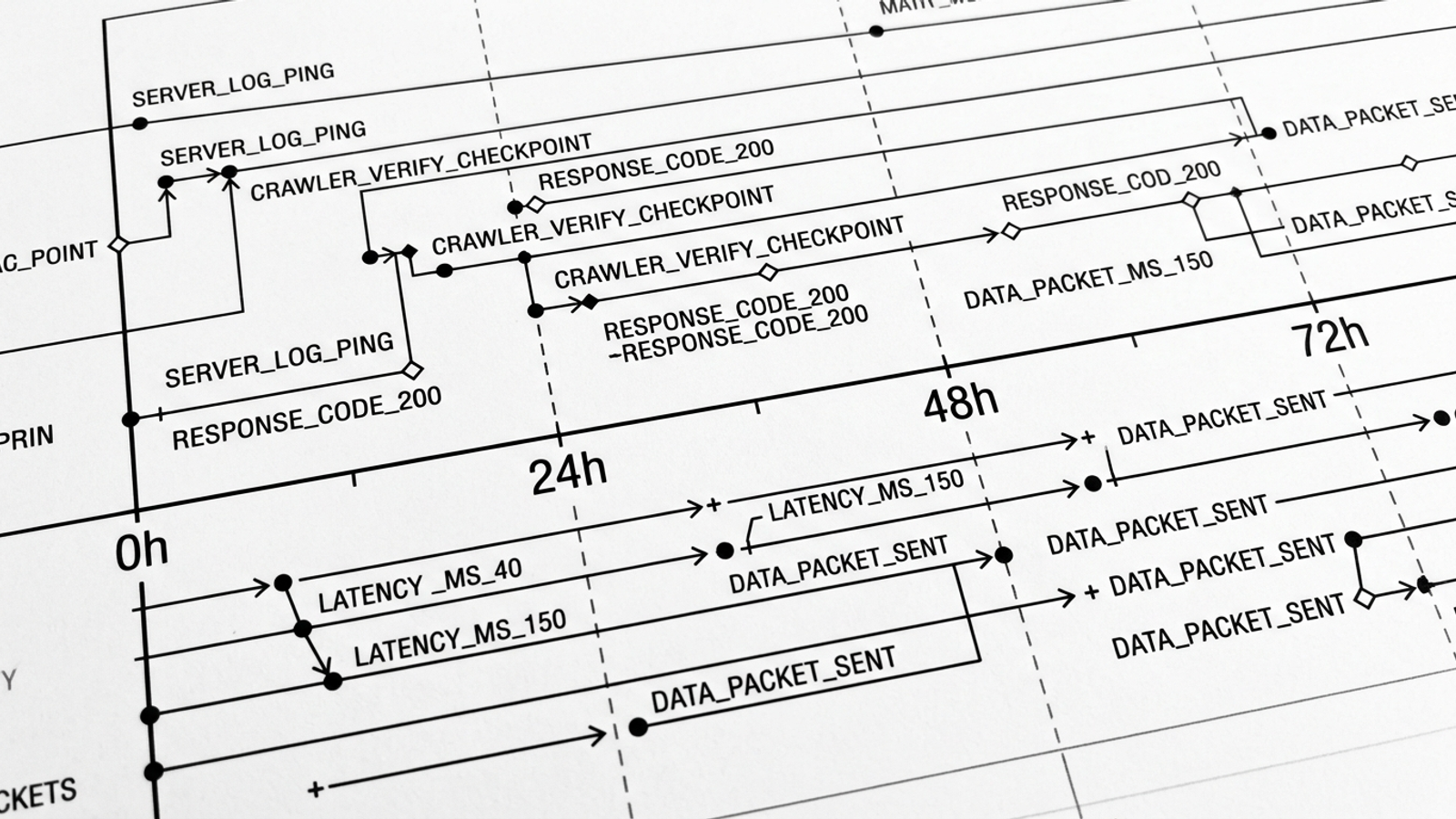
Inspect access logs for the treatment URL when you can. Look for a successful response to relevant crawler requests, including Googlebot, PerplexityBot or Perplexity-User, and OAI-SearchBot. Record the user agent, timestamp, requested path, and HTTP status. A successful request shows access to a URL, not that a particular interface indexed the new text or will cite it. No visible request is useful information too; it is not a reason to restart the clock until you get a more flattering window.
Check fresh sessions at 24, 48, and 72 hours
Run the same treatment and control queries at 24, 48, and 72 hours after deployment. Start a new session for every check. Do not continue a chat that has already discussed your company or shown the model your URL; that context can contaminate the observation.
Keep the ledger short enough that you will actually fill it in:
| Record | What to write down |
|---|---|
| Time and interface | Timestamp, query, and whether you used Google Search, Perplexity, or ChatGPT Search |
| Answer status | Whether an AI answer appeared under the test conditions |
| Treatment citation | Yes or no; paste the exact linked URL if yes |
| Control citation | Yes or no for its related query |
| Use of the source | The claim attributed to your page, or a note that the link appears without supporting the answer |
| Crawl evidence | Any relevant log request and response status observed by that check |
A linked treatment URL is the primary outcome. A brand mention with no source link is not the same result. Neither is a source link that points to another page on your domain. Record those observations, but keep the score honest.
Read the result without claiming more than you measured
If a citation appears, inspect the claim
Suppose your treatment URL appears in an answer by hour 72. Check whether the cited claim came from your new block. Does the answer carry over its number, rule, or boundary? Or did the engine cite the page while relying on a different passage or someone else’s data?
A citation shows that, for that query and observation, the interface linked to your page. If the answer also uses the new block, the result is consistent with the rewrite helping retrieval. It does not prove that the block alone caused the change. Crawls, competing pages, and answer composition can change during the same window. The frozen control and baseline make the observation more useful; they do not turn a live search interface into a sealed laboratory.
The practical decision is still clear. Keep the block if it gives the buyer a better answer and the citation uses it accurately. Save the exact wording and timestamp. Then test another query rather than announcing that you have solved AI visibility for the whole site.
If no citation appears, check the gates in order
A null result is not a verdict that clear answers never work. It means this page did not earn an observed citation for this query, in these interfaces, during this window. Diagnose it in an order that can change your next action:
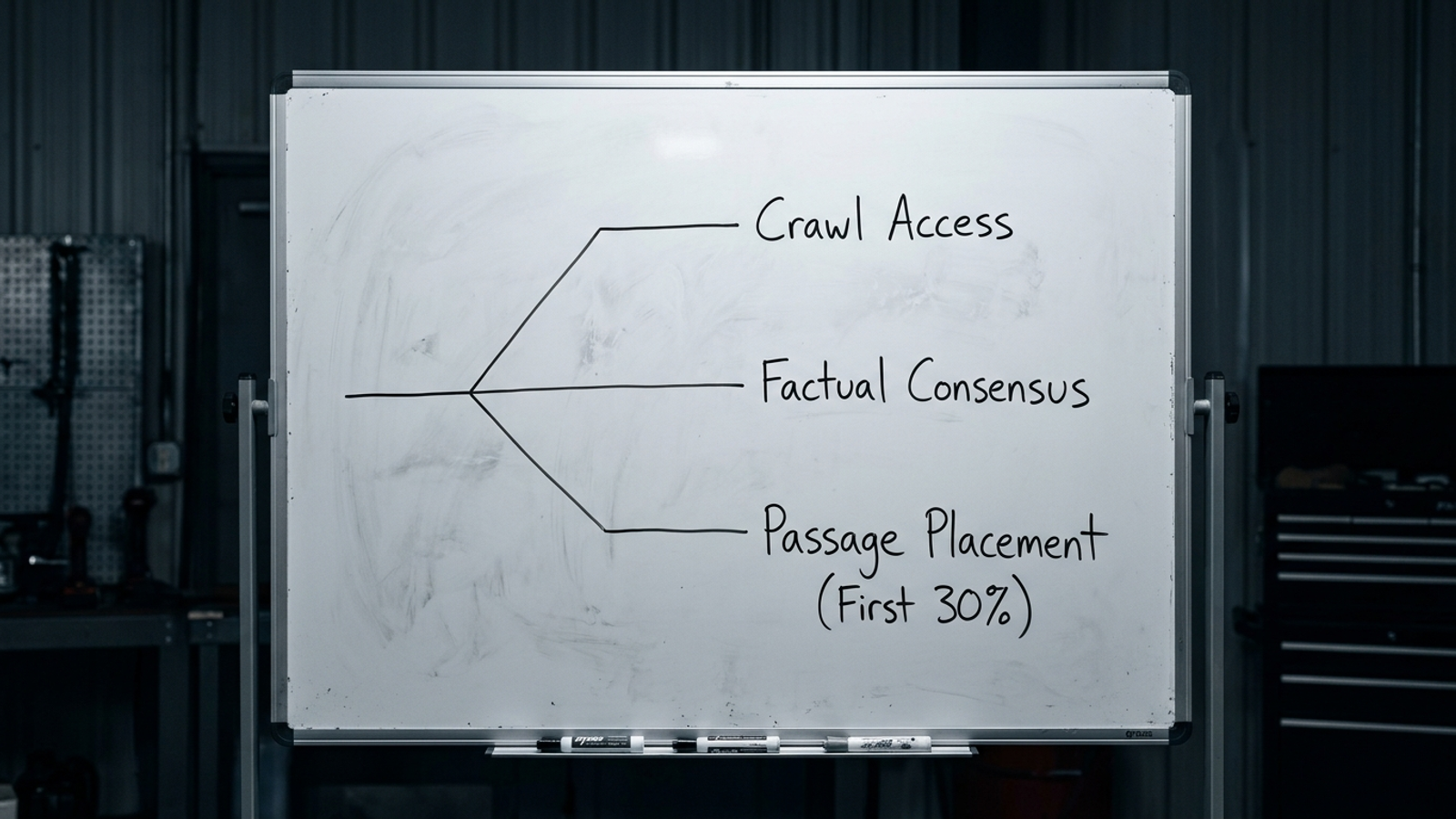
- Access and freshness: Did your logs show relevant requests for the treatment URL, and were they served successfully? Check whether crawler access was blocked. If you have no evidence the updated page was fetched, do not rewrite the block yet. You may still be testing an older version of the page.
- Query and page fit: Did the selected query produce an AI answer at each check? Did the treatment page remain a plausible result for that query? If the answer disappears or the page sits outside the range you selected, the test may not be giving the passage a fair opportunity.
- Clarity and support: If the updated page was accessible and the answer kept citing other sources, compare their quoted passages with yours. Is your lead sentence direct? Are the details checkable? Does a pricing or timeline claim need a clearer boundary? Revise what you can substantiate, not what sounds most certain.
Do not label a failed citation an entity consensus rejection because a dashboard or a hunch needs a name for it. You can observe crawler requests, answer status, links, and quoted claims. You cannot read an engine’s private decision process from a missing footnote.
Decide whether to repeat, revise, or stop
If you have no evidence of a fetch, fix access where necessary and repeat the observation window. If an AI answer rarely appears for the query, choose a better test query before judging the page. If the page was fetched and competing citations keep answering the question more directly, improve the block’s clarity or supporting detail, then run a new baseline and a new test. Change one thing at a time or lose the reason for keeping a ledger.
If the page earns a citation, the next question is whether the method repeats across other commercial queries. One page is an inexpensive way to test a mechanism, not a plan for maintaining visibility across a catalog. Checking hundreds of queries across three interfaces by hand becomes a job in its own right. That is where groas Earned Search is a better fit than paying an agency retainer for periodic reports: continuous execution and visibility work matter when the scope is larger than one operator’s test sheet.
Do not buy that scope before you have tested the small version. Keep the control frozen, publish one honest answer, and let the ledger tell you what to do next. A citation gives you a passage and query worth repeating. A null result gives you an access, query-fit, or content question to investigate. Either beats a sales deck that cannot tell you what changed.