

 LinkedIn
The brand ranked on page one of Google. When its growth lead asked ChatGPT for the top mid-market inventory reconciliation platforms, the answer named three competitors and left the brand out entirely.
This is an explicitly typical composite, not an incident I witnessed or a measured client result. Its organic report shows a number-two position for a primary commercial term, a number-three position for a category comparison query, and traffic moving in the right direction. The ChatGPT answer cites trade journals, a Reddit discussion, and competitor documentation. The brand does not appear as a recommendation, an alternative, or a footnote. Perplexity presents the same practical problem: buyers can ask for a comparison without encountering the company at all.
I have seen the operating mistake behind this kind of surprise before, in a different channel. Someone swaps a landing page without telling the Google Ads manager. The account structure is untouched, so the team keeps discussing bids and keywords while Quality Score deteriorates. Here, the search report stays green while the page an answer engine needs is blocked, empty, buried, or uncorroborated. The report measures the part of the system that still works.
The gap between rankings and citations is real: an analysis of citations across ChatGPT, Perplexity, and Copilot found that only 12% of cited URLs ranked in Google’s top 10 organic results. A page-one ranking tells this team something useful about Google. It does not establish that another service can retrieve the page, extract an answer, or find independent support for the brand.
The first reaction in the composite is to call the omission a temporary indexing lag. That is the wrong call. The team waits for an answer to correct itself instead of checking the chain that produces it. Working backward through that chain reveals five decisions, each reasonable enough on its own.
Decision 1: A crawler block stays after the threat changes
In early 2024, the engineering team wants to keep proprietary white papers and product documentation out of model-training crawls. An engineering manager adds a broad rule to the root robots.txt file. The intention is defensible. The implementation treats different automated visitors as the same visitor.
OpenAI’s crawler documentation distinguishes GPTBot, used for training, from OAI-SearchBot, used for search discovery, and ChatGPT-User, associated with user-initiated visits. A team can make different permission choices for those functions. This one copies a blocklist and leaves a blanket Disallow: / for AI-related user agents. Googlebot still gets in, so the standard organic audit stays reassuringly uneventful.
That is the first break in the chain. A crawler denied access cannot inspect the product page, however carefully the team has written it. The agency keeps working on titles and rankings; nobody revisits the server rule. Sixteen months pass. The brand’s absence looks mysterious only if the team starts its investigation at the content calendar instead of the server edge.
I would not respond by opening every page to every bot. The original concern about training access has not disappeared. I would separate training permissions from search and user-initiated retrieval, then check what the server actually returns. Our AI crawler swipe file covers that distinction. Before editing a sentence, establish whether the visitor can enter.
Decision 2: The redesign hides the product in the browser
Six months after the block goes in, the web team ships a redesign. Product tours, pricing controls, and comparison widgets move into a client-side React application. To a human clicking around in Chrome, the site looks better: the feature matrix responds, the pricing slider moves, and the comparison page feels polished. Google Search Console continues to show the pages indexed and ranking.
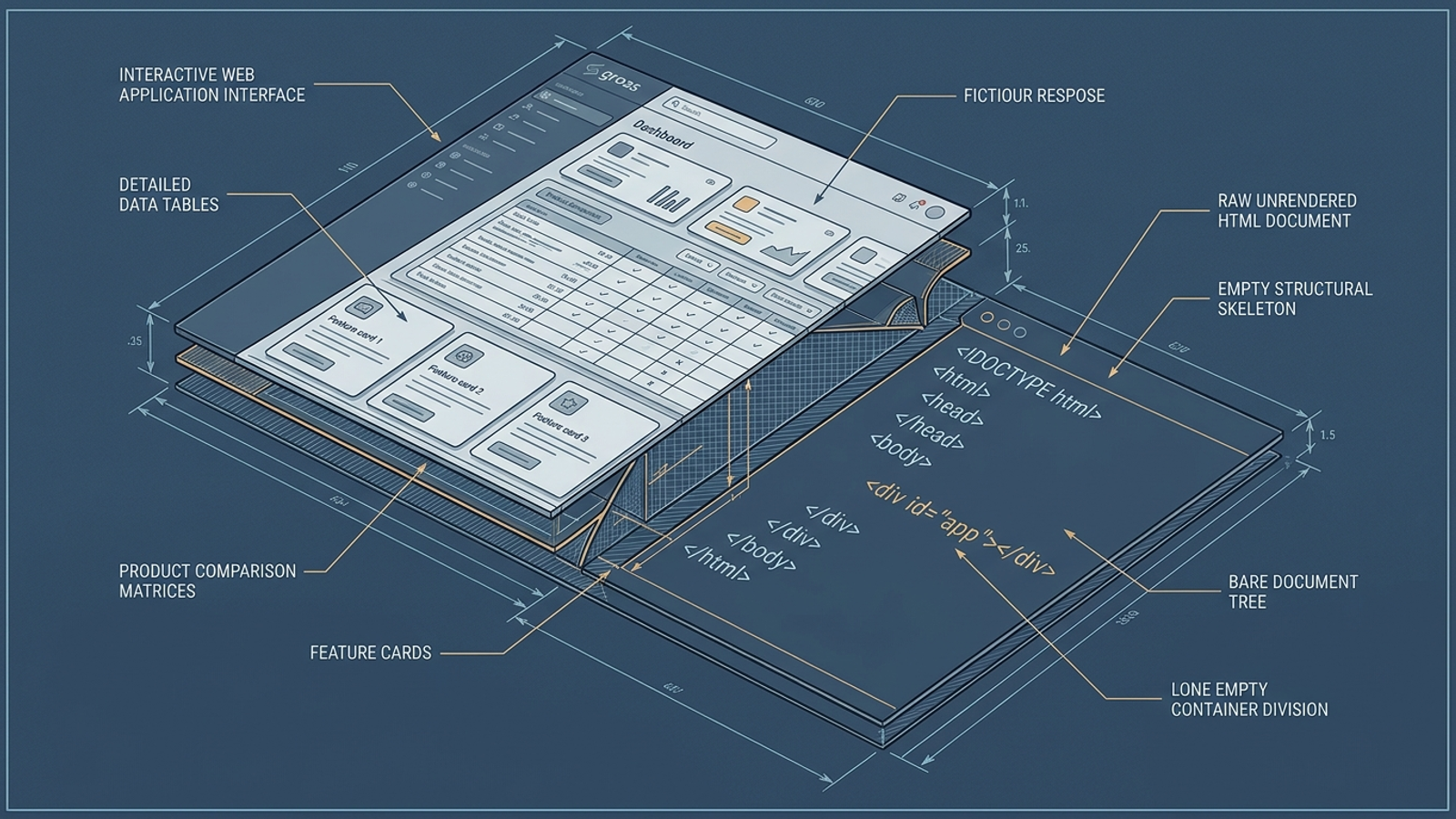
The team takes those signals as proof that the underlying content is available to everyone. But the browser view and the initial server response are different things. Google can process JavaScript in its rendering workflow; a crawler fetching the raw document may receive little more than <div id="root"></div> and script references. Research into JavaScript rendering and AI crawlers makes that distinction worth testing rather than assuming away.
In this composite, Perplexity reaches the comparison URL but finds no useful specifications in the HTML it retrieves. The product data exists after the interface loads. It does not exist in the response the bot has to work with. A competitor’s static documentation page supplies the specifications instead.
This is not an argument against interactive design. Keep the tour. Keep the controls. Put the core product facts in the server-delivered HTML as well. If the raw response is an empty shell, the attractive page is irrelevant to that fetch.
Decision 3: The answer arrives after the reader has left
Some pages do deliver their copy as HTML. The editorial team has a different problem: it writes the solution pages like magazine features. A panoramic image leads. A slogan promises to reimagine supply chain velocity. Several paragraphs describe industry frustration. The first concrete explanation of the software—reconciliation frequency, supported databases, transaction limits, pricing tiers—does not arrive until paragraph six.
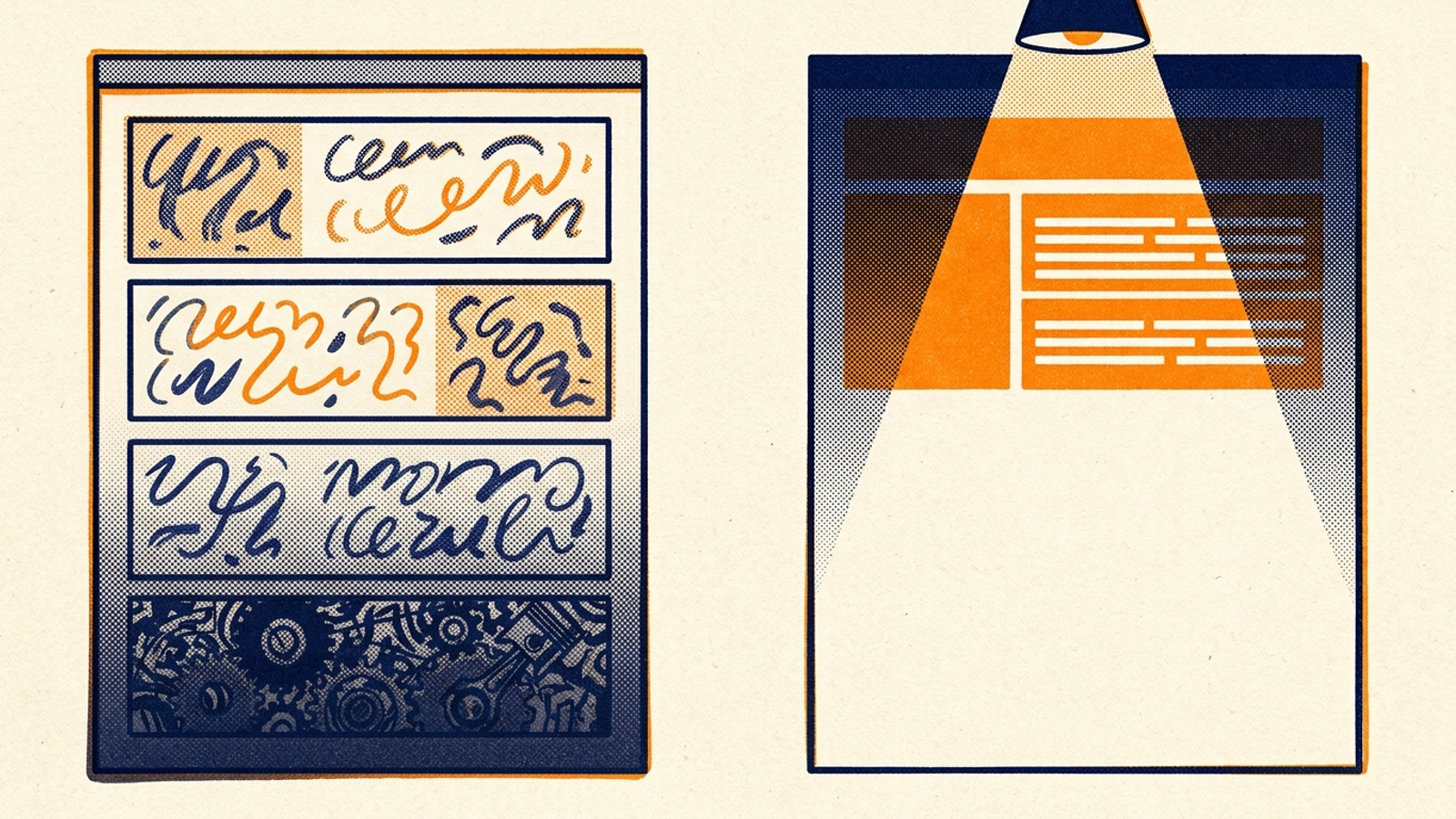
I understand why this happens. A brand team wants a page to feel like a brand, not a specification sheet. But a buyer asking which tools handle a particular reconciliation task has supplied a fairly clear brief. Opening with four paragraphs about the pace of modern commerce makes the answer harder to find.
Retrieval systems often evaluate passages rather than a page as one continuous story. The passage retrieval research cited here reports that about 44.2% of extracted citations come from the top 30% of a document. That does not mean every engine stops reading at paragraph six. It does mean the position and clarity of an answer are consequential, especially when another page states the requested details immediately.
In the composite, the competitor’s page names the integration in its heading and follows with throughput, update intervals, starting fees, and a plain HTML comparison table. The brand’s page eventually reaches its facts, but first asks the reader—or retrieval system—to sit through the manifesto. The competitor gets cited.
The fix is editorial, not mystical. Put the supported systems, limits, and pricing information near the top, then give the brand story room to work underneath. Answer the buyer’s question before asking them to admire the prose.
Decision 4: The brand has links, but few witnesses
While the web and editorial teams make those changes, the SEO agency keeps building backlinks. It reports placements, rising third-party domain metrics, and stable Google positions. From inside the old reporting frame, that looks like progress. The brand has plenty of pages pointing toward it.

What it lacks in this composite is independent discussion that supports its commercial claims. Its own site describes the product. Paid placements repeat the name. But relevant reviews, community conversations, and category comparisons offer little for an answer engine to draw on when it looks beyond the company’s assertions.
Multi-source corroboration is not the same job as accumulating links. A link can help a page get discovered without telling a buyer whether the product does what the sales page says. Reddit discussions about AI citations, review platforms such as G2 and Capterra, forums, and independent roundups are places where a brand might acquire that outside context. The team has spent on placements but has not checked whether useful, independent accounts of the product exist.
I would not manufacture consensus or treat every forum mention as an endorsement. I would look for the claims the brand makes alone and ask where a buyer could verify them. An owned page can state a capability; it cannot be its own independent witness.
Decision 5: The dashboard keeps confirming the wrong thing
For eighteen months, the weekly reporting call opens with ten target keywords, top-three organic positions, and rising Search Console impressions. No one routinely checks buyer prompts in ChatGPT Search or Perplexity. No one compares the brands those answers cite with the pages the company believes should appear. The server logs and the reports live with different teams, so even the access problem has no obvious owner.
That dashboard is not fake. It answers a narrower question than leadership thinks it answers. The agency is retained to protect classic rankings, and its report shows classic rankings. It does not show whether a conversational answer can fetch the site, read the specifications, or find a reason to mention the company. The team calls the report a search-health check anyway.
This is the damage: every group can point to a completed task while the buyer-facing answer remains empty of the brand. Engineering protected documentation. Web shipped the redesign. Editorial published the story. SEO defended the positions. Nobody checked the answer.
The fix: trace the missing answer back to its first break
Hiring another agency to write more pages would not resolve a crawler block. Rewriting the hero copy would not put specifications into raw HTML. Buying another backlink placement would not turn an owned claim into independent corroboration. The composite needs one owner of the full path from a buyer’s prompt to a retrievable, usable, supportable answer.
That is the operating distinction we built groas around. Our autonomous growth engine works across paid and organic search, with specialized models handling continuous execution while a named human strategist sets direction and remains accountable for business outcomes. The point is not to add a prettier score to the old report. It is to connect technical access, content, visibility, and the commercial question they are supposed to serve. A page cannot contribute to an answer merely because its Google position looks good.
Here is the gap-finding sequence I would run on the composite. Order matters: a downstream content fix cannot repair an upstream retrieval failure.
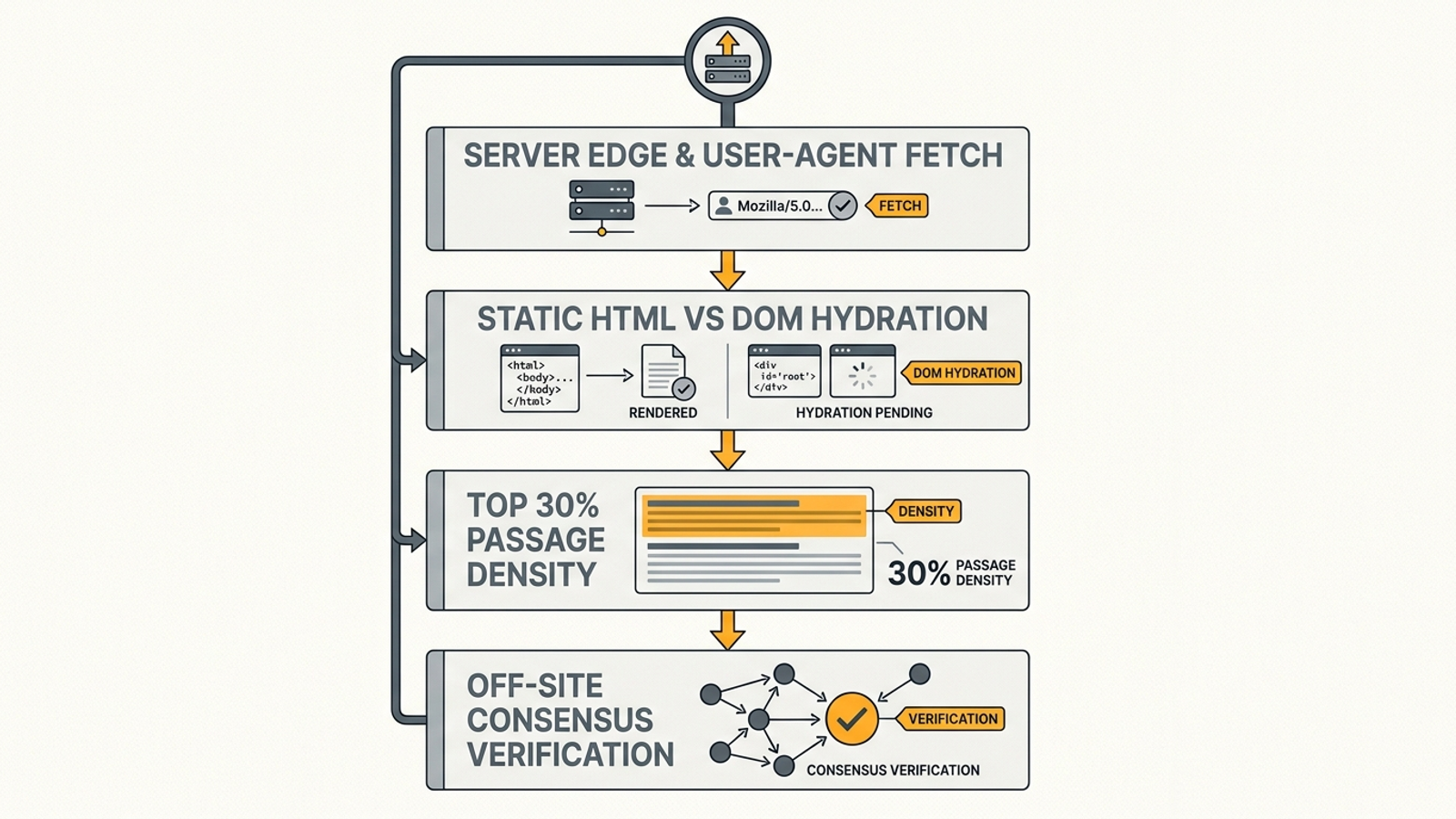
- Check permissions and responses. Inspect
robots.txtand raw access logs forOAI-SearchBot,ChatGPT-User, andPerplexityBot. Look for explicit blocks and rejected requests. Decide separately which training, search, and user-initiated access you intend to permit. If the relevant visitor cannot reach the page, stop here. - Inspect what the server sends. Run
curl -sL https://yourdomain.com/product-page | head -n 60against an important commercial page. Look for the product name and facts in the returned HTML, not just a root element and JavaScript bundle. If the specifications appear only after client-side rendering, put those core facts into server-delivered HTML before tuning the copy. - Read the first answer-bearing passage. Check the opening 250 words of each primary solution page. Can a buyer find supported databases, pricing tiers, integration limits, and operational boundaries without passing through a brand essay? Move existing facts forward and write them plainly. Do not solve a buried answer by adding another 3,000-word page.
- Look for independent context. Search the review directories, forums, and category comparisons a buyer might encounter. Note which product claims appear only on your own site. The goal is not a quota of mentions; it is to see whether anyone outside the company gives an answer engine useful grounds to include it.
Teams searching for content gaps that keep their business out of AI answers often get sold a visibility score first. A score may show the omission. It cannot tell them that the server denied the request or that the product matrix lives entirely in the browser. At groas, the work is to connect those signals to execution rather than leave a marketer interpreting another passive dashboard. For the page-level work that follows, our guide to getting cited in ChatGPT and Perplexity goes deeper on markup and passage structure.
The rule I apply after this postmortem is simple: never audit search presence through human eyes alone. A human can wait for a page to render, skip the throat-clearing, and infer a product’s value from a polished site. A retrieval system works with what it can access and extract. If the team has not checked that path, its page-one ranking may be accurate—and still tell it nothing about why the brand is missing from the answer.