

 LinkedIn
Three of our category pages drew roughly 3,800 verified AI bot fetches in 30 days and earned zero live-answer citations. In the same window, one dated, technical post drew 537 verified fetches and appeared in 330 live answers. We had not failed to publish on the topic. We had built pages that pointed to answers without containing one.
That is an awkward gap to find because the pages looked healthy. They sat in our primary navigation, worked for human visitors, and attracted crawlers. A conventional content-gap report would have sent us looking for unwritten articles. Our 30-day AI crawler logs sent us back to URLs we already had.
This is the postmortem: the setup, the signal we misread, the damage it hid, and the fix we made.
The setup: three useful menus with nothing to cite
Our /category/google-ads, /category/ai-search, and /category/ppc-automation pages did what category pages have long been asked to do. They collected posts under clear headings and gave visitors titles, dates, excerpts, and links. If someone wanted to browse the archive, the pages helped them do it.
I understand why that design passes review. Build a clean grid, make the cards clickable, keep the category header short, and move on. To a person browsing with a coffee in hand, a tidy directory is useful. To a retrieval agent trying to answer a specific question, it may offer little more than directions to another URL.
The distinction matters. A category page about Google Ads is not necessarily an answer about Google Ads. A list of titles can tell a model where an answer might be; it cannot necessarily supply the sentence the model needs to use. Teardowns of directory-style pages make the same point: navigation and extractable substance are different jobs.
Our hubs were built for the first job only. Nothing was broken for the human visitor, which made the omission easy to miss.
The first sign: the fetch counts looked like success
When we pulled the edge logs, the three hubs showed about 3,800 verified AI bot requests across 30 days. Their positions in our header and footer helped explain the attention. Crawlers following links through the site had plenty of routes back to those category URLs.
At a glance, that looked encouraging. The bots could reach the pages. They kept coming back. If we had stopped at the request total, we might have called the hubs a successful way to expose our content to AI systems.
Then we put those figures beside the result that mattered: none of the category URLs appeared as a live-answer citation in the answers we tracked across ChatGPT, Perplexity, and Claude. Repeated access had not become attributable visibility.
One post gave us a control of sorts. The dated technical article at google-ads-updates-2026 drew 537 verified bot fetches in that same window. Of those, 330 were classified as live-answer events: runtime retrieval activity associated with an active answer. The post was also cited in the generated responses we tracked. The live-answer count is not, by itself, a count of quotations; it shows how differently the post performed when an engine needed material for an answer.
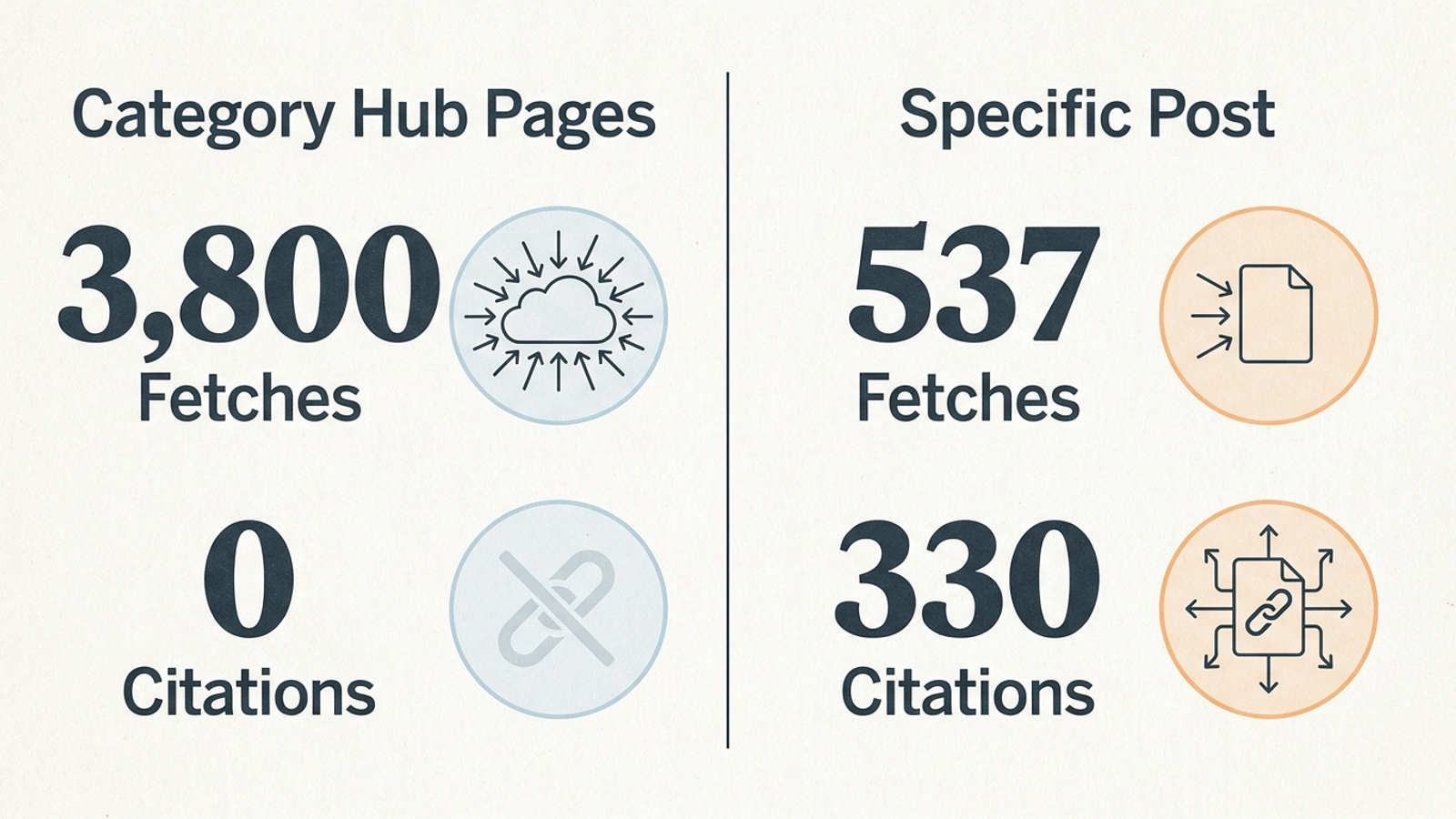
The hubs drew roughly seven times the fetches of that one post. The post supplied material for live answers; the hubs supplied menus. A fetch was not a citation, and our busiest category URLs proved it.
The wrong call: we treated crawler activity as demand for the page
The mistake was not publishing category pages. People need ways to navigate an archive. The mistake was reading repeated crawler requests as evidence that those pages were useful to an answer engine in their existing form.
Their placement made that mistake tempting. Each hub was linked throughout the site, so it was likely to be encountered whenever a crawler moved through our content. The logs dutifully recorded the requests. We could see machines touching high-priority URLs and tell ourselves the architecture was working.
But being easy to find is not the same as being useful to quote. When a live retrieval agent fetches a page to help resolve a buyer’s prompt, it needs text it can carry into an answer. Our category pages offered post titles, dates, short excerpts, and outbound links. The substantive explanations sat one click deeper.
A retrieval system can parse and compare passages, but a card that says, in effect, “Oct 14, 2026 … Read more” does not make an operational claim. Technical explanations of retrieval-augmented generation and chunking help explain why a collection of small, disconnected fragments is a poor substitute for a complete answer. The model may find the page. It still has to find a usable passage on it.
We had spent years making those pages good routing switches. That was the wrong specification for a URL we also wanted cited.
The damage: the answer lived somewhere else
When an engine needed a statement about bidding changes or an agency model, our standalone articles had a better chance of providing one. The category hub could point toward a relevant post, but it did not state the conclusion itself. If the agent went deeper, it might cite the post. If it did not, the hub had little to offer.
That explains the contrast in the logs without pretending every crawler request represents the same intent. Some bots index broadly; others retrieve during a live conversation. Separating broad indexing from user-triggered retrieval matters because a large aggregate count can conceal very different behavior. It also keeps us from treating every bot visit as a missed citation opportunity.
The gap was narrower, and more useful, than “AI cannot see our content.” AI agents reached the category pages. Those pages gave them no self-contained answer worth attributing. Meanwhile, the specific post could do that job.
Standard gap reports were unlikely to put this problem at the top of our queue. Keyword-coverage tools tend to ask what topics or queries a site lacks. LLM citation monitoring tools can show whether a brand appears in sampled answers. Neither view, on its own, explains why a URL that crawlers repeatedly fetch contributes nothing to those answers.
I call this the fetched-but-uncited gap: a page exists, attracts verified AI traffic, and still fails to supply an answer. Drafting another article would not fix that page. We had to inspect the page the agents were already visiting.
The second check: were those bots even real?
Before changing the hubs, we had to rule out a simpler explanation: inflated bot counts. A request can announce itself with a GPTBot, ClaudeBot, or PerplexityBot User-Agent string without belonging to that operator. Counting labels in raw server logs as authenticated AI visits would make almost any conclusion suspect.
In a separate audit of 13,774 claimed AI bot requests at our edge, roughly 70% were unverified. That is a large enough share to turn an exciting crawler chart into a chart of strangers wearing name tags they printed themselves.
We filtered for verified crawler identities rather than trusting the header alone. Cloudflare’s verified-bot framework, checks against vendor IP ranges and Forward-Confirmed Reverse DNS, and independent discussions of bot-log verification all point to the same operational distinction: a claimed bot visit and a verified one are not interchangeable.
After that filter, the roughly 3,800 category requests remained. The frustrating result survived the sanity check. Real AI crawlers were reaching our hubs; the category URLs still had zero live-answer citations.
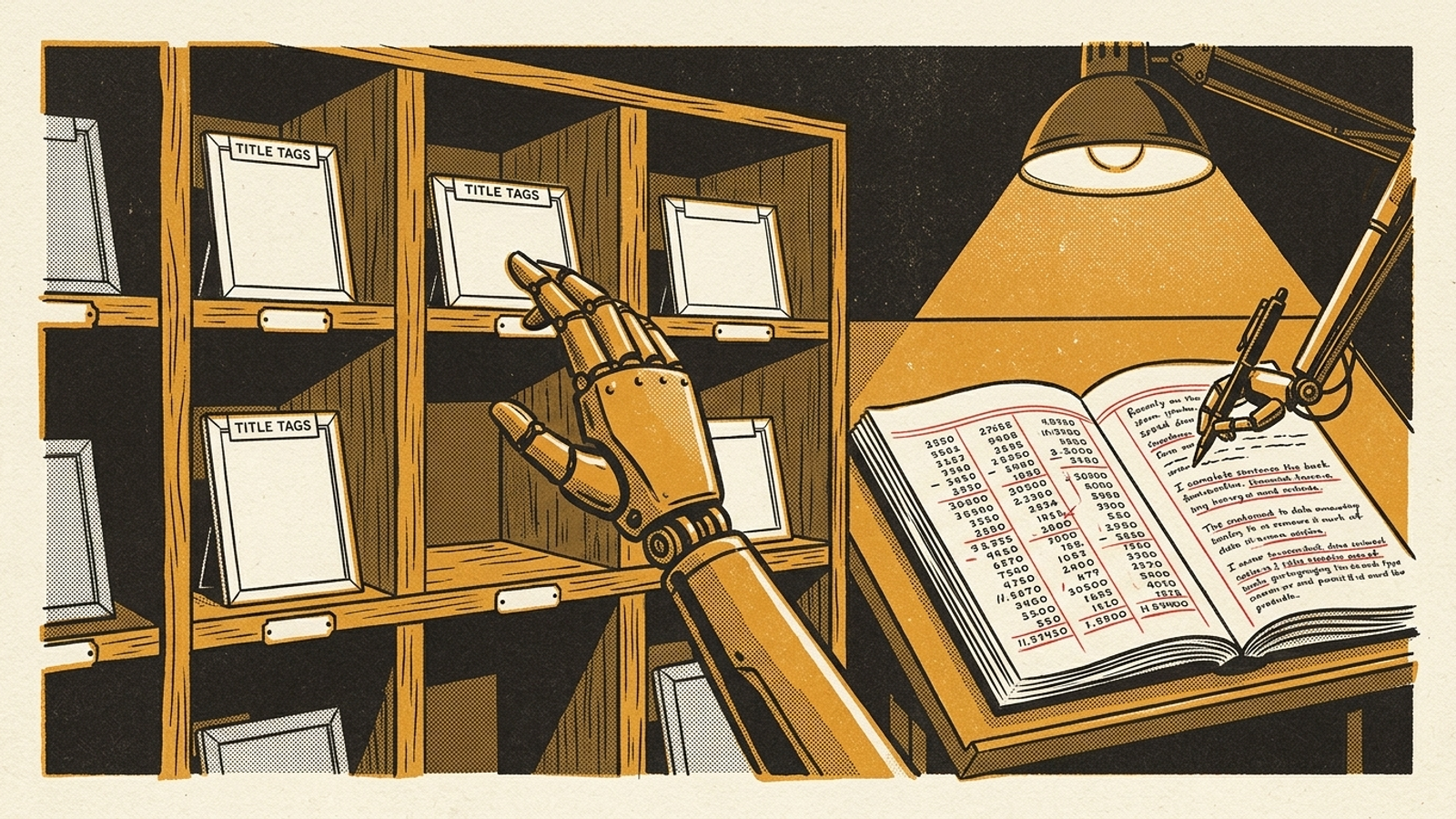
That check prevented us from fixing a problem made of log noise. It also made the actual problem harder to wave away.
The fix: put an answer before the archive
We did not remove the category grids. They still serve visitors who want to browse. We changed what appears before them.
Instead of opening a category page with a two-word heading and a run of cards, we placed a concise, roughly 250-word synthesis block above the archive loop. On the Google Ads hub, that block defines our framework, gives current cost-per-acquisition benchmarks, and states the execution rules for the topic. A retrieval agent fetching /category/google-ads now encounters a complete statement on the page itself, not just links that might lead to one.
That is the mechanism, not a claim that the change has already produced a new citation total. We observed the failure, changed the page, and gave future retrievals something specific to extract and attribute. The same principle appears in our discussion of getting cited in ChatGPT and Perplexity: the opening of a page needs to stand on its own when an engine arrives with a question.
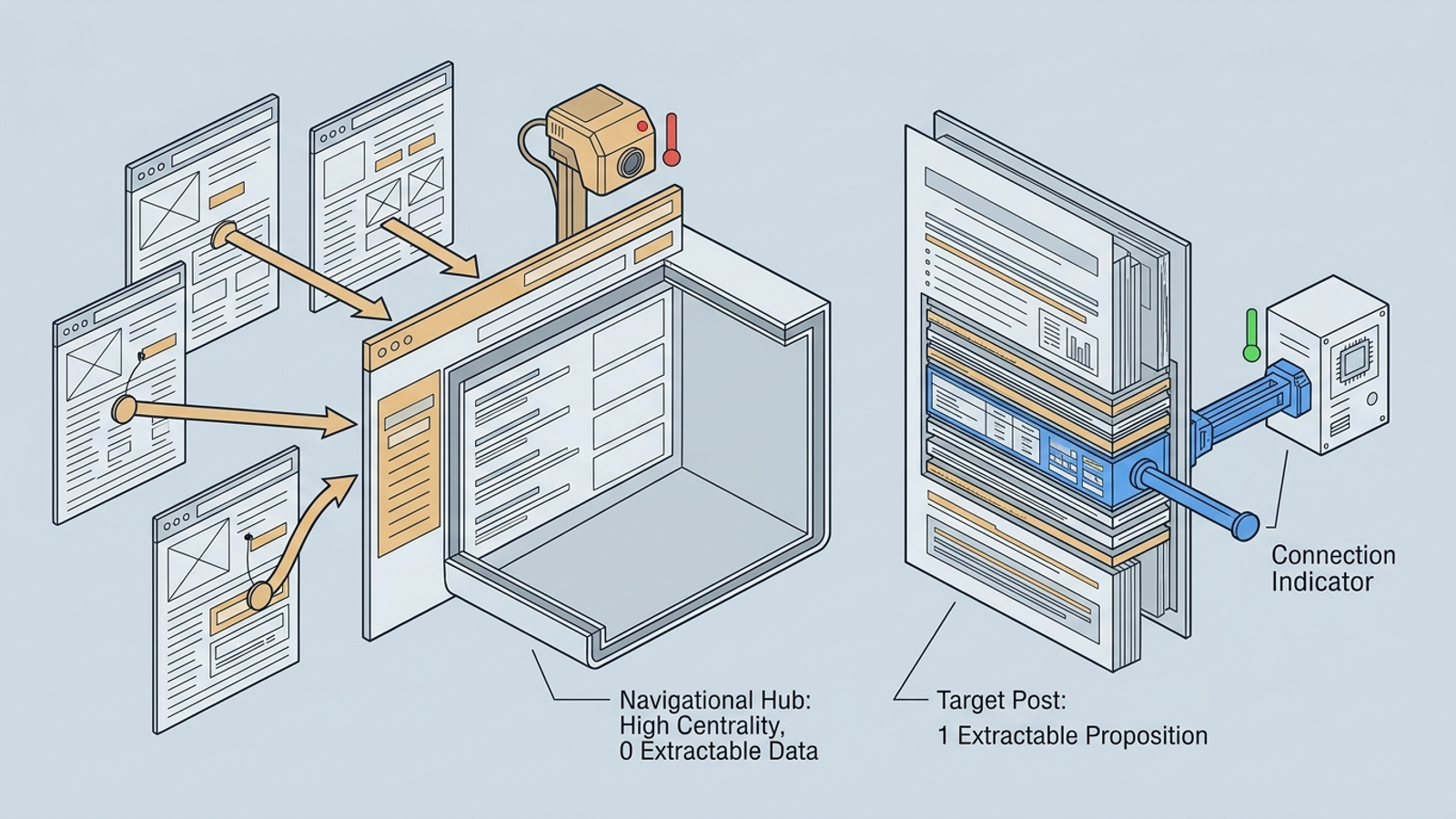
The repair was small compared with commissioning a new library of posts. It required us to stop treating a heavily linked, crawlable URL as merely a signpost.
How we would catch the same failure earlier
The useful diagnostic is a comparison by URL path, not another list of topics to write. We need to see verified crawler requests alongside live retrieval activity and tracked citations, without collapsing those measures into one vague “AI traffic” number.
In practice, I would check it in this order:
- Verify the requester. Ingest edge or server access logs and filter claimed AI visits against authenticated crawler identities rather than User-Agent text alone.
- Group requests by path. Keep broad indexing activity distinguishable from runtime retrieval where the logs allow it.
- Compare with answer evidence. Put verified fetches, live-answer events, and observed citations next to each URL. A live retrieval request is a useful signal, but it is not automatically a citation.
- Open the high-fetch, low-citation pages. Check whether they state an answer before asking an agent to follow another link.
Our category hubs stood out under that comparison. Other sites may find documentation indices, resource directories, glossaries, or other heavily linked pages instead. I would not assume the top row is always a category page. I would inspect the top row before ordering fifty more articles.
This is also where the old agency workflow starts to look expensive for what it misses. A monthly keyword report can tell you a page is indexed and a topic is covered. It cannot, by itself, show that verified agents keep fetching a URL with nothing to cite. At groas, our autonomous growth engine is built to connect those search signals with continuous execution: specialized models track crawler patterns and structural content issues within client guardrails, while a named human strategist owns the decisions. The point is not a prettier activity report. It is to catch a failure while the signal is visible and fix the page that caused it.
Our own numbers made the lesson difficult to dodge: about 3,800 verified fetches on three hubs, no live-answer citations, and a single specific post feeding 330 live answers over the same 30 days. The pages were accessible. The topic existed. The answer was simply somewhere else.
The single rule I now apply is this: if an AI agent can fetch a crawlable URL, that page must answer a specific operational question before it starts listing links.