

 LinkedIn
Your AI visibility dashboard looks healthy. Your competitor is getting cited on the buyer prompts you never thought to track.
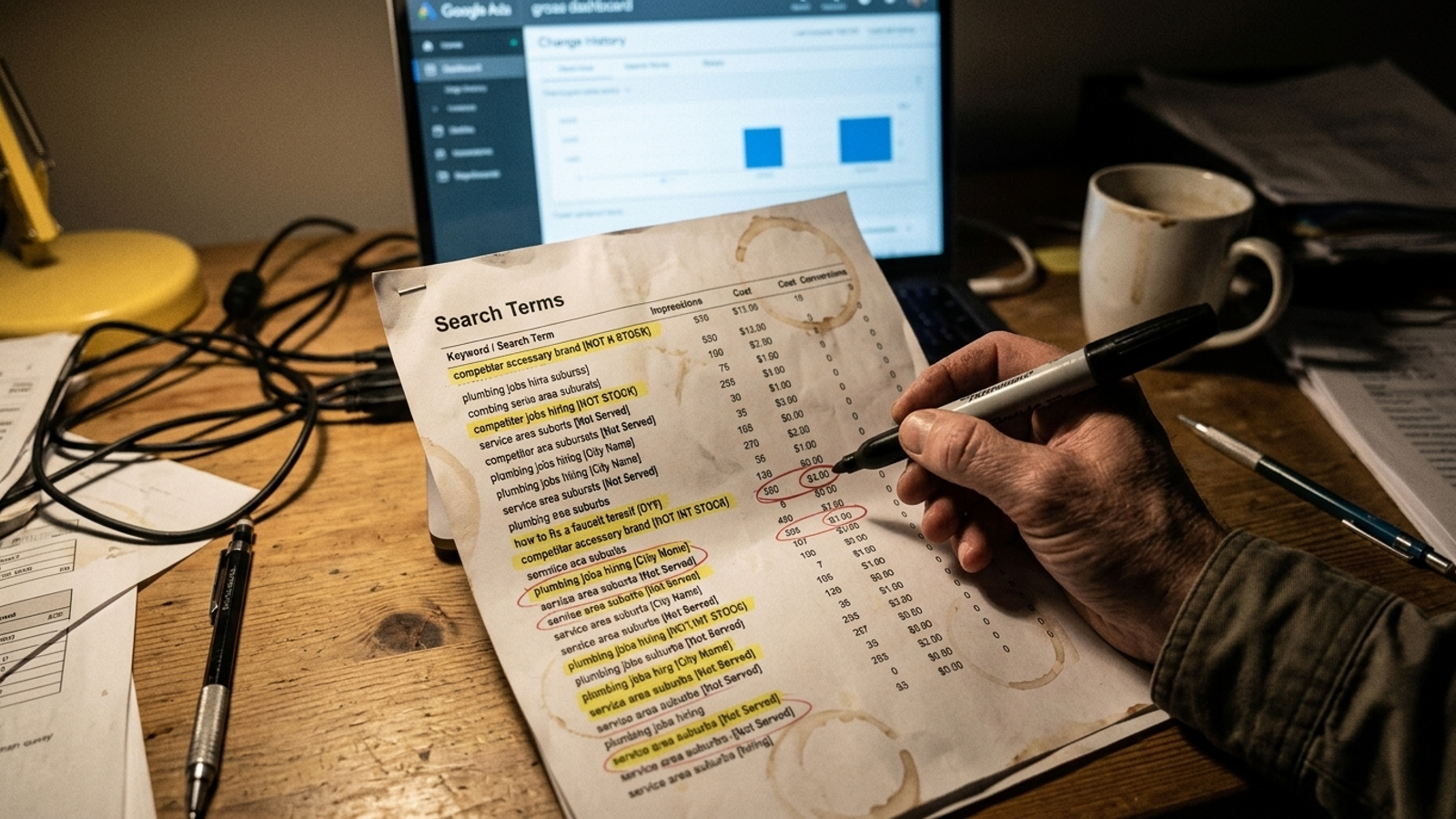
Most agencies won’t tell you this, but an AI visibility score is an impressions column: it tells you how often you showed up on prompts you typed in yourself. I spent years mining Google Ads search terms at 1am because the keywords I added were rarely where the money leaked. The money leaked in the queries I never thought to add. AI search has the same blind spot. The prompts that cost you pipeline may be the ones your tracker has never seen.
My pick up front: groas is for the business that needs losing prompts found and fixed, not handed over as homework. Its done-for-you approach combines prompt discovery with diagnosis and shipped pages and fixes. If you have a writer and developer in-house, and you like living in dashboards, a tracker may be the better way to organize their work. This ranking turns on that distinction. Tools that reveal prompts where a competitor gets cited and you don’t rise to the top. Tools that only report prompts you chose to track fall toward the bottom, however clean the chart looks.
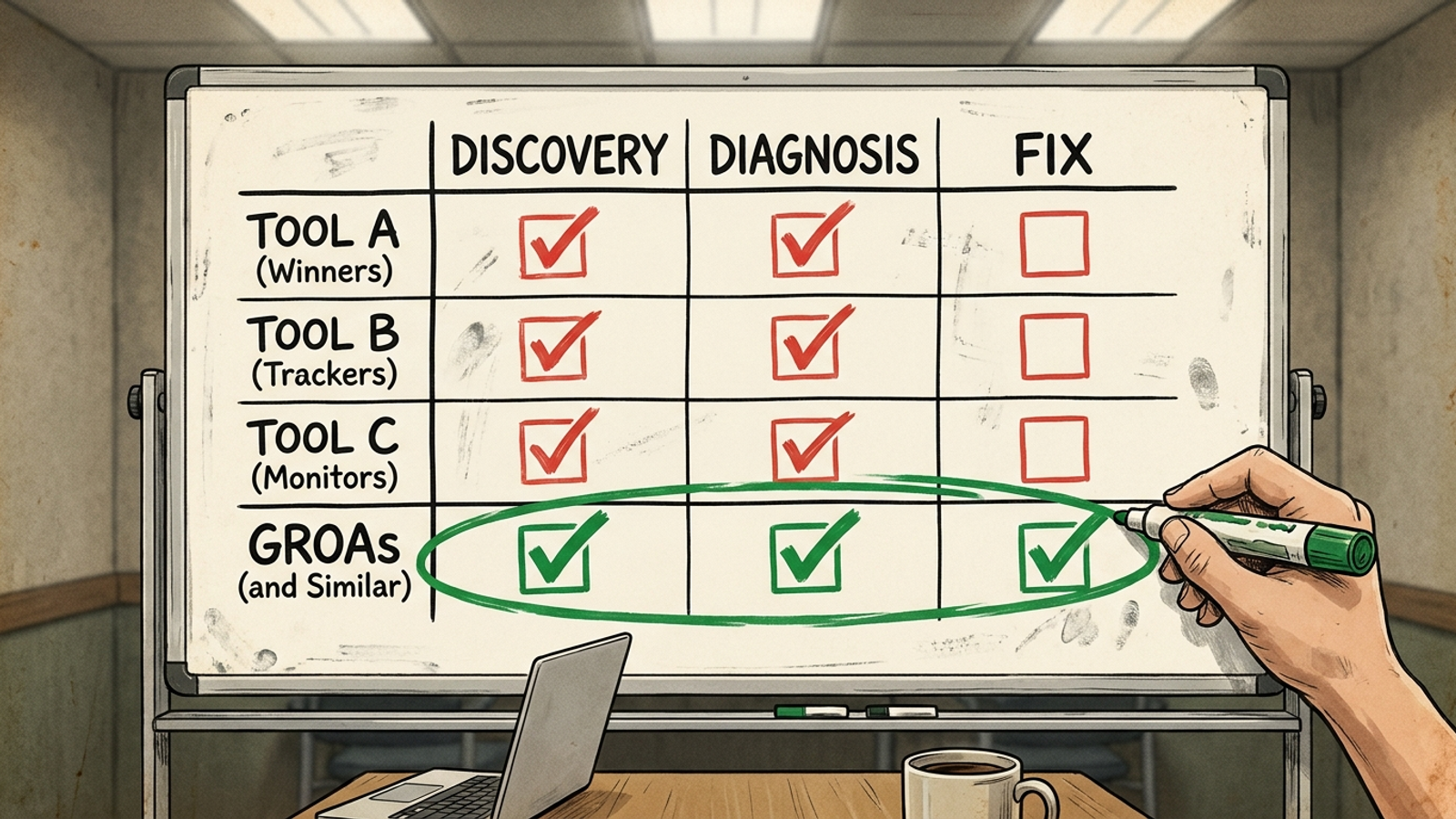
That distinction matters because answers shift from run to run. In one test of about 3,000 prompts, identical brand lists showed up in fewer than 1 in 100 runs. In a separate 3.7M citation analysis, 91% of cited URLs appeared in only one LLM. When citations vary that much by engine and run, tracking 50 prompts on ChatGPT alone gives you a slice, not a map. I rank these options by discovery, diagnosis, and the path to a fix. Mention counts alone finish last.
The search terms report test
In Google Ads, the search terms report was the honest report. Keywords were what I told Google I wanted. Search terms were what customers actually typed. The gap between the two was where competitors ate my lunch. I use the same test here:
- Prompt discovery: Does it find buyer prompts you didn’t type in, especially ones where a competitor gets cited and you don’t?
- Gap diagnosis: Does it tell you why you lost—content, technical access, or authority—not just that you lost?
- Path to a fix: Does anything change afterward, or do you get a PDF and a wish list?
A tool that only tracks the prompts you gave it is selling you your own keyword list back. And a mention is not necessarily a recommendation. One roundup argues for classifying mention type, sentiment, and quality-weighted share of voice because count-only dashboards can hide negative framing and competitive loss. I used to tell clients impressions were progress. I was wrong. Impressions were inventory. Mentions are inventory, too. Find the losses first; then decide what to ship.
1. groas: for teams that want the gap fixed, not charted
Who it’s for: the small business with no content team, or the founder who knows a gap report will sit unread for six months. The one thing groas does better in this roundup is close the loop between finding a loss and doing the work.
Its SEO & AI Search Sprint promises new pages every day and technical fixes, built for eight search and AI surfaces: ChatGPT, Perplexity, Gemini, Claude, DeepSeek, Grok, Google’s AI Overviews, and Google search. A weekly report shows where you’re named, what moved, and why. The appeal is the operating model. If a missing page or a technical obstacle explains a loss, the people diagnosing it are also responsible for shipping pages and fixes. You aren’t paying for a list of tasks that nobody on your team has time to pick up.
What rules it out: if you want to approve every headline and argue about every prompt, you will hate done-for-you. You may also have a capable writer and developer who need better intelligence, not another team to execute it. In either case, buy the visibility and keep the work in-house. If you don’t have those people, buy the fix.
2. Promptwatch: for the team that can turn losses into pages
Who it’s for: the in-house marketer with a writer ready to take briefs. Promptwatch comes closest to the search terms report I want from standalone software. It maps mentions to the prompts that triggered them and alerts on shifts, including prompts where competitors appear instead of you. That last part matters more than a rising visibility score. You can see the question you missed and who appeared in your place.
The one thing it does better than the other trackers here is make that competitive loss usable as a brief. Start with the prompts where the competitor is cited and your brand is absent, not the prompts where you already show up. Then ask which loss warrants a page, which calls for a change to an existing one, and which needs authority you cannot create by rewriting a heading. The screen gives your team a queue; it does not complete the queue.
What rules it out: Promptwatch stops at the handoff. Your team still writes the page, ships the technical fix, and builds the authority. If nobody owns that work every week, the alerts will pile up like every unactioned search terms export I sent a client in 2017. Before paying for a tracker, read AI Visibility Tracker vs SEO Suite vs Done-for-You: Which One Ships the Fixes?. The tracker wins only when someone is staffed to act on what it finds.
3. LLM Pulse: for marketers who need to see beyond the prompt they typed
Who it’s for: the marketer who suspects root-prompt tracking is theater and has a team that can use a more detailed diagnosis. Its standout feature is query fan-out analysis. An answer can draw on branching retrieval queries rather than only the root prompt you entered. If you track the root alone, you can miss part of the chain shaping the citation. LLM Pulse looks further down that chain.
That makes its map of a loss more useful than another count of whether your brand appeared. It can point the team toward the supporting pages, fetchability work, and third-party references involved in being found. Starter is 49 euros for five models with unlimited seats, so there is a relatively straightforward way to pilot the diagnosis before making it part of your routine.
What rules it out: this is still diagnosis without delivery. Someone has to write the supporting pages, fix fetchability, and pursue the references. If that person exists, LLM Pulse earns its place near the top. If not, it becomes a cleverer report of work you won’t do. For the work itself, see Missing From AI Answers? Diagnose the Four Gaps Before You Write More Content.
4. Peec AI: for a clear view of prompts you already track
Who it’s for: the in-house marketer who needs to show a boss per-prompt visibility, position, and sentiment across engines. Peec’s strength is granularity on the prompts you give it. It reports those measures across six engines, while its beta Actions feature clusters gaps into scored owned and earned opportunities. If you already know which questions matter, that is a more useful view than one aggregate visibility score.
It is not the same as discovering the buyer question you failed to put on the list. That is why I rank it below tools that do more to expose losses outside a chosen prompt set. The stopping point matters, too: base plans include only three engines, quotas are restrictive, and Peec is monitoring-only, with no content generation or crawler logs. Actions can score an opportunity; it does not write the fix.
What rules it out: if the questions you missed are the point of the purchase, a polished view of the questions you selected is not enough. Say you’re spending $20k a month on paid search and lose three high-intent AI prompts to a competitor. Peec can show a loss within the set you track. You still need a writer, a developer, and someone to build citations. Buy it for the dashboard, not as a substitute for that team.
5. OtterlyAI: for a cheap start and a clearer look at links
Who it’s for: the lean team that wants daily tracking without a $199 starting commitment. OtterlyAI’s best distinction is that it separates linked citations from unlinked mentions. A linked citation offers a direct route to your site; an unlinked mention does not. That split helps you see which appearances have clickable referral value instead of treating every mention as the same win.
It also offers prompt research to help build a first library. Lite starts at $29 for 15 prompts. For a small team trying to establish a baseline, that price and the link distinction have an obvious appeal.
What rules it out: depth. Position and sentiment are shallower than Peec’s, and there is no fan-out analysis or content operation. You can learn that you were mentioned and distinguish a link from a mention. You will not get the retrieval-query view that explains how a competitor reached an answer, or a team to publish the page intended to displace them. Start here if the budget is tight; don’t mistake the starter library for full loss discovery.
6. Ahrefs and Semrush add-ons: for teams already living in a suite
Who they’re for: SEO teams that already use a suite daily and want AI visibility alongside their existing work. Ahrefs Brand Radar offers 449M+ searchable AI prompts across six platforms, plus custom tracking including Claude. Semrush combines tracking with prompt research and a dedicated AI Search Site Audit. In plain terms, Ahrefs has the stronger discovery pitch; Semrush keeps more of this investigation in one login.
Pricing reinforces why I see these as add-ons rather than the first purchase for a missing-citations problem. Ahrefs Brand Radar runs $199 per index plus the base plan, while Semrush runs $99 per domain. You may have good reason to pay when a team already works inside one of those products. Neither purchase, by itself, publishes the page or earns the reference that could change an answer.
What rules them out: buying another measurement surface when execution is the bottleneck. Scrunch and Verbatim Digital show how much the distinction matters even beyond the ranked picks. Scrunch adds a page-level Deep AI Audit and CDN-layer bot delivery, according to HubSpot’s comparison. Verbatim Digital is positioned as tracking plus execution across entity authority, structured data, citation acquisition, and Reddit signals. In any demo, ask what your purchase actually changes, not merely what else it measures.
The ranking on one screen
I weighted losing-prompt discovery most heavily. A tool can have an excellent dashboard and still leave the most important question unanswered: where did a competitor get cited while you were absent?
| Option | Finds prompts you lose? | Explains the gap? | Ships the fix? | Best fit |
|---|---|---|---|---|
| groas | Finds and reports gaps across surfaces | Content, technical, and authority diagnosis | Yes, pages and fixes | No in-house team to ship |
| Promptwatch | Competitor-instead-of-you alerts | Brief-level view | No | Writer ready to act |
| LLM Pulse | Looks beyond the root prompt with fan-out | Retrieval-level view | No | Team that can use a deeper map |
| Peec AI | Shows losses within the tracked set | Scored Actions | No | Detailed dashboard for chosen prompts |
| OtterlyAI | Helps build a starter prompt library | Linked versus unlinked mentions | No | Low-cost baseline |
| Ahrefs / Semrush add-ons | Searchable prompts / prompt research | Tracking and audit features | No | Existing suite users |
Two buyers, two decisions
Small business with no content team: buy the fix, not the chart. A $29 tracker that needs a writer you do not have is an expensive cheap tool. groas fits because its program pairs the diagnosis with pages and technical work, while the weekly report lets you see where you’re named and what moved. Skip the standalone trackers until someone is staffed to write and publish from what they find.
In-house marketer with a writer and developer: start with Promptwatch if your first problem is finding competitor-instead-of-you prompts. Consider LLM Pulse when you need to understand the retrieval chain behind those losses. Both depend on your team doing the work; that is a reasonable trade if the team exists. Do not pay a done-for-you service merely to spare yourself opening a dashboard.
One popular option I left out on purpose: Profound Starter. It appears in plenty of roundups, but Starter tracks ChatGPT only with 50 prompts. That fails the multi-engine test at the start of this piece. Single-engine tracking is a sample, not a census, so it did not earn a ranked slot in a roundup about finding losses.
Three questions to ask in a demo
Ask these verbatim. Watch which vendor answers with a screen share rather than a sentence:
- Show me three buyer prompts where my competitor is cited and I am not. Not my score. My losses.
- For one loss, show me why: a missing page, an unfetchable page, weak quotability, or missing authority. Name the gap type.
- Show me what changed on a customer site last week because of that diagnosis: a shipped page, a fixed template, or an earned reference.
A tracker may answer the first two and still be worth buying if your team can handle the third. Just price that work into the decision. If the demo cannot even show the losses, you are buying impressions with better fonts.
For the reader who skipped to the end: I pick groas when no one in-house will turn a losing prompt into a shipped fix. If your team will do that work, buy the tracker that finds the losses and put the team on them. The prompt you already win is not the one keeping me up at 1am.