

 LinkedIn
I chased ChatGPT citations the way I used to chase Quality Score: build a prompt list, rewrite the page, check back tomorrow, expect the position to hold. It did not hold. There is no position to hold. Most bad AEO advice carries paid-search habits into a system that does not work like an auction. I brought plenty of those habits with me. These are the seven I had to drop.
1. “I can pay my way into the answer”
This was the first habit I had to break because it feels exactly like paid search. In Google Ads, I am used to a trade: raise the bid, win the impression, get the click. When I saw ads appear inside AI Overviews, my brain filed them under the same system as citations. Bigger budget, better shot at being named as the source. Familiar machinery, new screen.
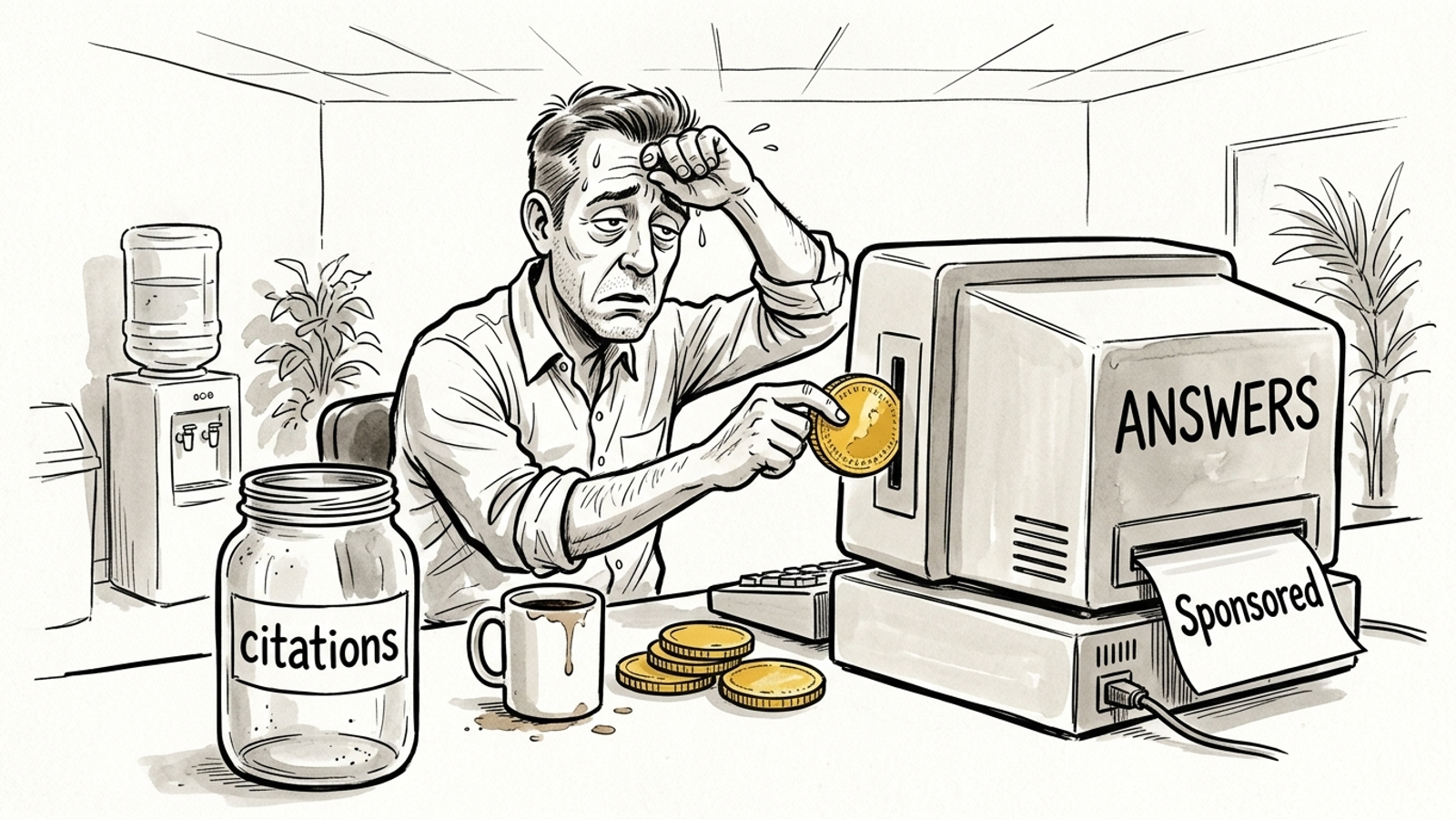
Google keeps those two things apart. The ads in AI Overviews run as clearly labeled Sponsored blocks above, below, or inside the answer, pulled from existing Search and Shopping inventory. The citation list is built separately, from pages the model uses to form the response. Paid placement and organic citation often do not line up for the same keyword, and there is no evidence that buying the ad slot moves you into the cited sources.
That distinction matters when someone points to an ad beside an answer and calls it an AEO win. The ad may be doing its job. It is still an ad, not evidence that the answer engine found your page worth quoting. Budget buys the labeled placement; it does not buy the citation. Keep the two measures separate.
2. “Rank #1 and ChatGPT has to cite you”
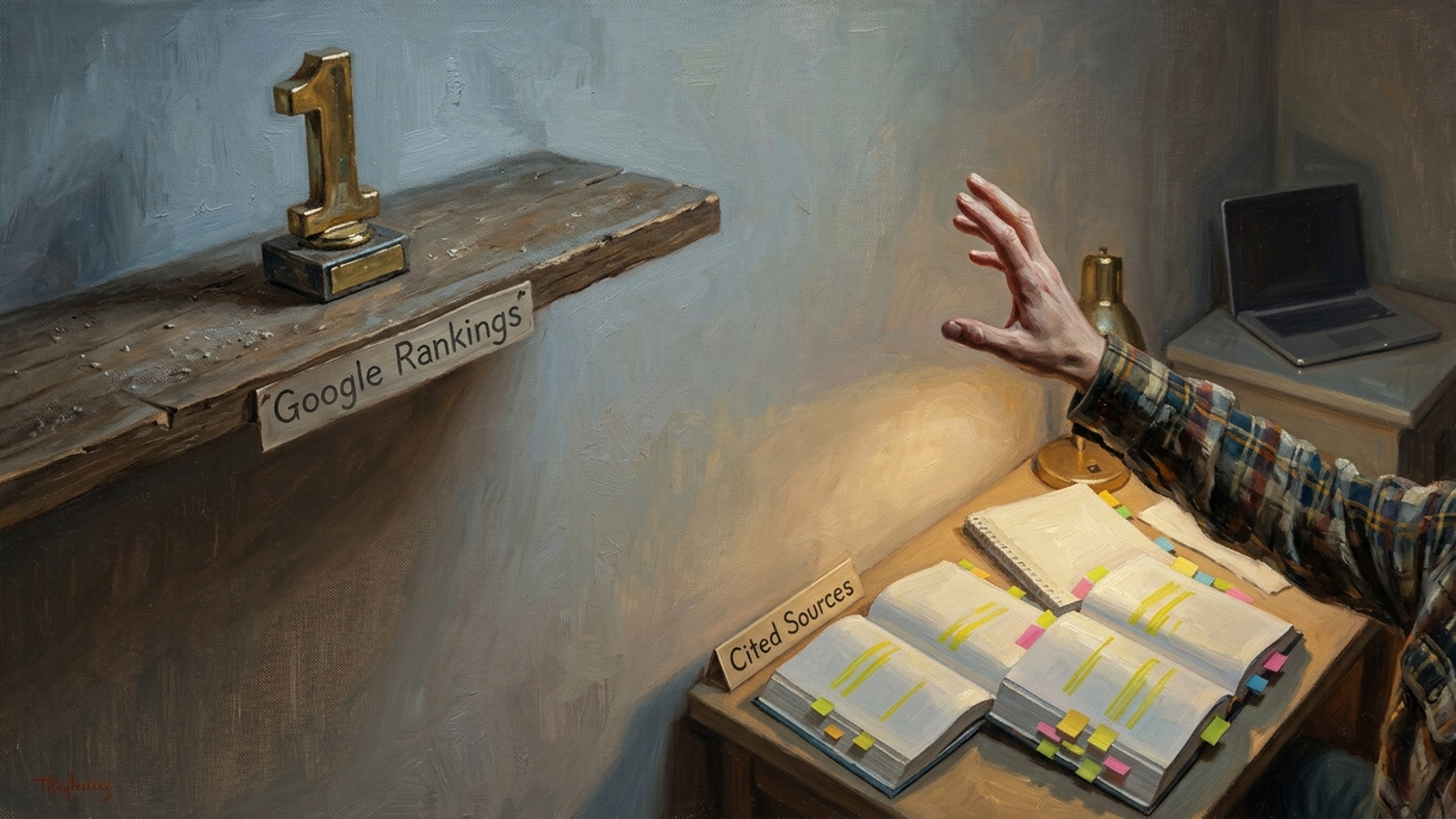
I used to tell clients position one was the whole game. I was wrong, at least for answers. Top of page meant top of mind in the search results I worked on. But an answer engine needs a passage that addresses the prompt, not a trophy for the page that won a different ranking contest. Its retrieval step can pull the two or three sentences that solve the question. That is why getting cited is a retrieval auction for passages, not pages.
An Ahrefs analysis of 863,000 SERPs found only 37.9% of pages cited in AI Overviews also ranked in the top 10 for the same query. Roughly three in five citations went elsewhere. Across engines, the gap is wider: only about 10% of ChatGPT citation URLs matched the Google top 10, and 79% did not even appear in the top 100.
This does not make rankings worthless. It makes them an incomplete proxy for the job. A page can be easy to find and still make the reader dig for the answer; another can give a clean answer to the exact question being retrieved. Rank can help a page get found. It cannot force that page to be quoted. When I review a page for citations, I read the answer block before I admire its position.
3. “Just add schema and the bots will find you”
I love schema the way I used to love exact match. It feels like control. Add code, validate it, get the little green check. What the deck calls “machine-readable clarity,” I call a receipt that proves you did something. So when someone says FAQ or Article schema will flip you into ChatGPT answers, the PPC brain nods along. Finally, a lever.
It is not that lever. An empirical test across OpenAI, Gemini, and Perplexity found schema markup had no measurable effect on LLM visibility, with domains running complete schema performing no better than those running none. Google says no special schema is required for AI features, and a separate 1,885-page test found no meaningful lift from adding it. The correlation is tempting because professional sites may have both schema and citations. That does not mean the markup earned the mention.
Keep schema for the purposes it serves, including rich results. Do not budget it as citation work. If the page never answers the buyer’s question plainly, a valid markup test does not rescue the paragraph. I would rather fix what a reader and a retrieval system can actually use than celebrate another green check.
4. “More pages means more mentions”
This came straight from my old keyword builds. More ad groups felt like more coverage, so more blog posts felt like more chances to get quoted. I watched clients publish ten thin variations of the same service page and wait for the citations to roll in. They did not. Answer engines do not owe you a mention for each URL you add. They need passages that fit the question.
A review of 26,283 ChatGPT source URLs found 43.8% of citations went to best-of list content, with 79.1% of those pages updated in 2025. The pattern points toward direct answer fit and freshness, not a reward for sheer volume. One page that gives the number, the steps, and the date in 120 clear words can do more useful work than ten 600-word posts that circle the question. A large content calendar can hide a very small amount of actual answering.
I recognize the impulse. Building another page is easy to record in a plan; improving the passage that already gets close feels less impressive on a status call. But the reader does not care how many URLs you shipped. Neither does the person asking the prompt. If a page is close to answering the question, update the winner. Do not clone it and call the extra URLs coverage.
5. “If you block the bot, it will just remember you from training”
I believed this longer than I should have because it sounded like how LLMs worked to me. The model read the internet once, so surely it remembers a service page and can name it later. But a remembered name is not the same as a sourced answer. When ChatGPT or Perplexity shows sources, the fetch and the passages it retrieves matter. Memory does not get a footnote. A fetched page can.
That makes robots.txt a much less glamorous part of citation work than most AEO pitches suggest. ChatGPT search depends on OAI-SearchBot and Perplexity answers depend on PerplexityBot being allowed to fetch. A broad User-agent: * Disallow: / rule left over from a staging site can take you out of both. An analysis of more than a million citations found 73% of sites had a technical barrier such as robots rules or JavaScript-only rendering.
I can spend an afternoon polishing a headline and still give the bot no accessible page to quote. That is an especially expensive way to avoid opening a text file. Check whether the bots can fetch the page before rewriting it. If access is blocked, better copy is not the first fix. If access works, then I can argue about the sentences.
6. “I checked one prompt, so I know my visibility”
In paid search, I lived in the search terms report. One query, one row, one decision. So my first AI tracking sheet was one column: ask ChatGPT “best CRM for plumbers,” see whether we show up, mark yes or no. Clean. Useless. AI answers can return different text and sources across runs, users, and sessions. I was treating one answer as a standing position when it was one observation.
The spread is wider than most PPC people expect. One 42-day study drew 445 distinct domains for a single broad prompt on Google AI Mode, with day-to-day domain turnover around 60 to 70%. That is why single-query snapshots are statistically meaningless and teams need repeated samples and citation rates with confidence intervals. The useful question is not “Did I appear when I checked?” It is “How often do I appear when I ask the same relevant questions again?”
I now run the same five buyer prompts ten times each and count how often we get cited. That sheet is less satisfying than a green yes/no cell, but it gives me something I can compare on the next check. It also stops me rewriting a page because one response happened to leave it out. Say you spend $20k a month on ads. You would not pause a keyword on one click and call that analysis. Sample answers; do not spot-check them. A citation rate is a better working measure than a screenshot of one good reply.
7. “AEO is a project you finish”
This is the one I still catch myself believing. In PPC, I loved a finished build: structure set, negatives mined, budgets split, done. I wanted the same neat handoff for AI citations. Publish five pages, fix the crawl, check the box for Q2. The work looked complete, so the result ought to hold.
It does not hold because retrieval keeps changing underneath it. After Google made Gemini 3 the default AI Overviews model in January 2026, reported overlap between Google’s top results and AI Overview citations fell from 76% to a range of 17–38%, depending on methodology. Ahrefs attributed the drop to AI Overviews relying more on fan-out query results. In plain English, one search gets split into multiple sub-queries, and citations can come from pages that appear across those results. The page that got quoted in March can miss in May without anyone touching it.
My first instinct when a citation slips is still to ask what broke, as if someone swapped a landing page without telling me. Sometimes the right first check is technical. But if the page remains fetchable, I cannot assume a lost mention means the old build failed. The answer being assembled around it may have changed. Treat citations like search terms: something to check and learn from regularly, not something to launch once.
The routine I use follows the same order as a leaky ad account. Do not raise the budget to fix tracking. Fix access, improve the match between question and answer, then measure what happens. In practice, that means five moves:
- Check the fetch. Look at
robots.txtand crawler rules for OAI-SearchBot and PerplexityBot before touching the copy. - Give the money page a quotable block. Aim for 40 to 80 words with the number, steps, and date the question needs. Skip the throat-clearing.
- Write for the prompt, not just the keyword. Match the question buyers ask ChatGPT and answer it in the first two sentences.
- Sample instead of spot-checking. Run the same five prompts ten times each and track citation rate.
- Refresh the winner monthly. Check details such as price, date, and availability rather than cloning another page.
I keep the copy-ready blocks for pages, schema, and crawlers open while I do this. It saves me writing the same robots rule twice.

The hard part is not understanding that list. It is accepting that there is no ceremonial moment when I can close the file. A finished project feels professional; maintenance feels like I missed something. I liked handing a client a clean account and moving to monthly check-ins. I have to resist bringing that same expectation here. If the passage that won last month loses to a fresher paragraph, the response is to check the fetch, read the competing answer, and decide whether my page still answers the prompt clearly. Not to order five more pages by Friday.
What replaced the finished build for me is a calendar block I actually keep: thirty minutes on Tuesdays. Same five buyer prompts, ten runs each, citation rate in a sheet. Refresh the date and price on the winning page. Fix a fetch issue if the log shows one. The rest runs continuously in groas, which is why I stopped trying to do this by hand every day. Paid and organic search produce more decisions than I want to babysit in a dashboard; groas pairs continuous execution and logged actions with a human strategist on the account. I still check the sheet. I just stopped pretending one good month means the work is done.
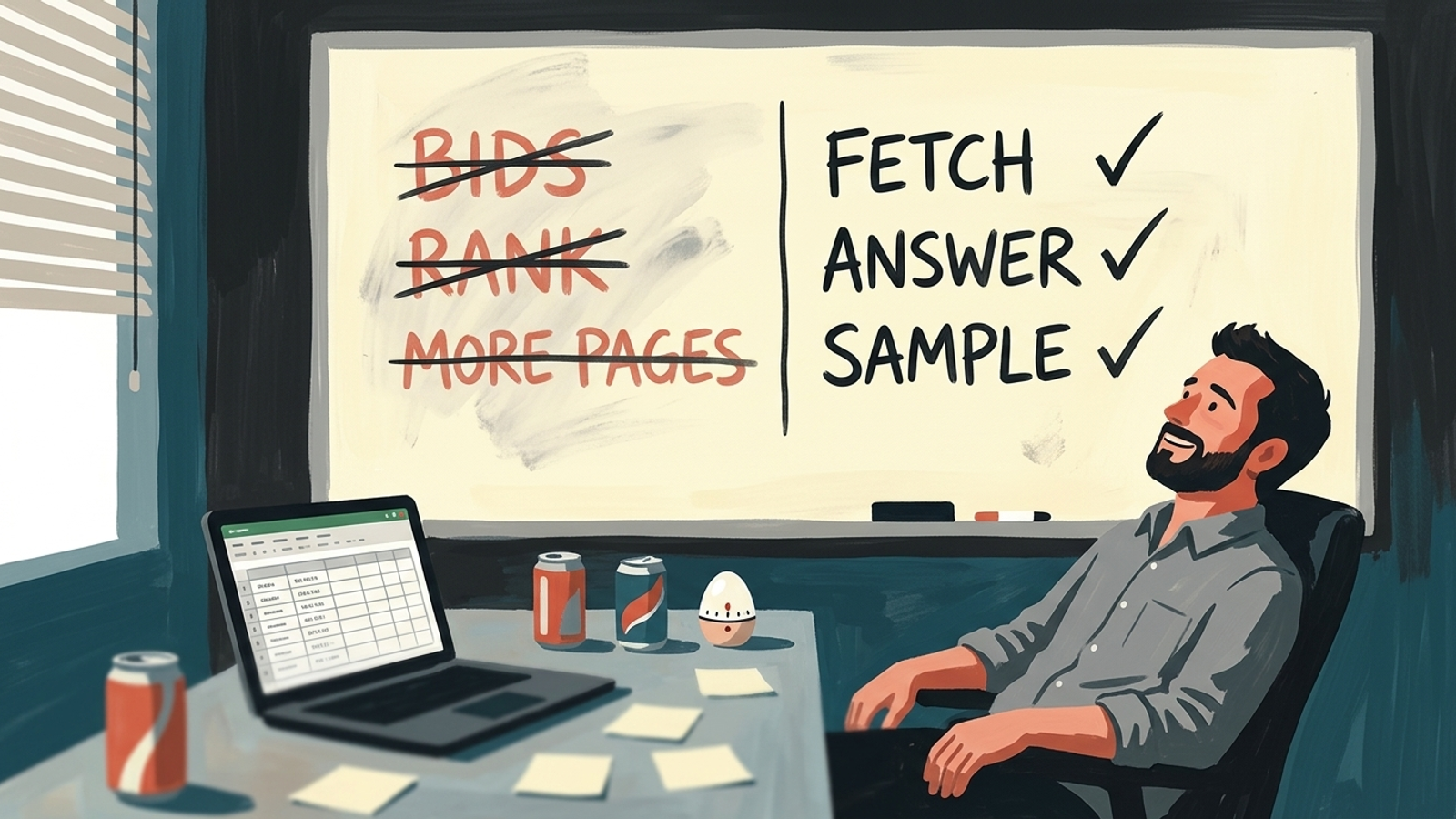
The PPC brain is not useless here. I still test one change at a time, count what happens, and care about cost per acquisition more than raw mentions. What I stopped doing is expecting an answer engine to behave like an auction. There is no bid to raise for a citation, no rank to defend as a guarantee, no volume play that forces inclusion. There is a fetch I can allow, a passage I can make easier to quote, and a citation rate I can watch instead of trusting one screenshot.
Budget buys ads. Passages earn citations. Sampling tells me whether the work holds. Start with the fetch check on Tuesday, fix one answer block on Wednesday, and check again next week. If I want that loop running without doing every task myself, groas is built for continuous paid and organic search execution, with actions logged and a human owning the outcome. I believed the finished build myth because finishing a build used to be one of my favorite parts of the job. I still like crossing it off the list. I just no longer mistake that feeling for a citation strategy.